Published: October 20, 2026
By Jim Lichtman


Photo by Sue Winston on Unsplash
On March 4, 1865, a tall, tired man stood before a crowd gathered at the United States Capitol to deliver what would become one of the greatest speeches in American history.
Abraham Lincoln was beginning his second term as president. The Civil War, which had torn the nation apart for nearly four years and claimed hundreds of thousands of lives was not yet over. But the Confederacy was nearing defeat.
However, instead of celebrating victory, Lincoln called for reconciliation, knowing that defeating the Confederacy would not, by itself, heal the country. The hatred and divisions that had fueled the war would not disappear simply because the fighting ended.
But reconciliation could not come at the expense of justice. Slavery was not merely a difference of political opinion. It was a profound moral wrong, and Lincoln did not pretend otherwise. Healing the nation would require both compassion and moral conviction.
Then, in words that would become among the most memorable ever spoken by an American president, he declared:
“With malice toward none, with charity for all, with firmness in the right as God gives us to see the right…”
Forty-one days later, Lincoln was assassinated. The president who had called upon a divided nation to put aside its hatred became a victim of the very hatred he had sought to overcome.
Lincoln was not asking Americans to abandon their principles for the sake of unity. He understood the difference between political victory and moral leadership, between defeating an adversary and treating that adversary as an enemy.
More than 160 years later, his words still challenge us.
On November 3, 2026, Americans will go to the polls–some already casting mail-in ballots–in an election that will help determine which party controls Congress and its ability to shape federal laws and exercise oversight of those entrusted with public office. The stakes go beyond political victory. They concern whether constitutional limits are respected and whether those who govern remain accountable to the people they serve.
Whatever the outcome, the larger questions facing our democracy will remain:
Can we disagree without treating one another as enemies?
Can we hold our political leaders accountable, even when doing so means challenging those we support?
Can we defend the Constitution and the rule of law with equal conviction, regardless of which party holds power?
And most importantly, can we still distinguish between what is politically advantageous and what is morally right?
The answers will reveal something far more important than where we stand politically. They will reveal what we are willing to stand for, what we are prepared to defend, and what we refuse to compromise.
The Civil War and today’s political divisions are not equivalent. But the moral questions Lincoln raised have not disappeared.
Last Thursday, I asked, “Has America lost its way?”
Perhaps the more important question is whether we still possess the moral courage to find our way forward.
On November 4, 2026, the votes may have been cast, but the work of democracy will be far from finished. Will Congress fulfill its responsibility to provide meaningful oversight? Will we, as citizens, demand accountability from our leaders, even when doing so challenges our political loyalties?
An election can change who holds power. It cannot, by itself, guarantee that our divisions will heal or that the principles of our democracy will endure.
Preserving those principles is our responsibility. And that responsibility does not end on Election Day.
In 1865, Lincoln challenged a divided nation to find its way forward without abandoning its moral convictions.
More than 160 years later, that challenge remains ours.
Comments
Recent Commentaries
Has America Lost Its Way?
October 16, 2026
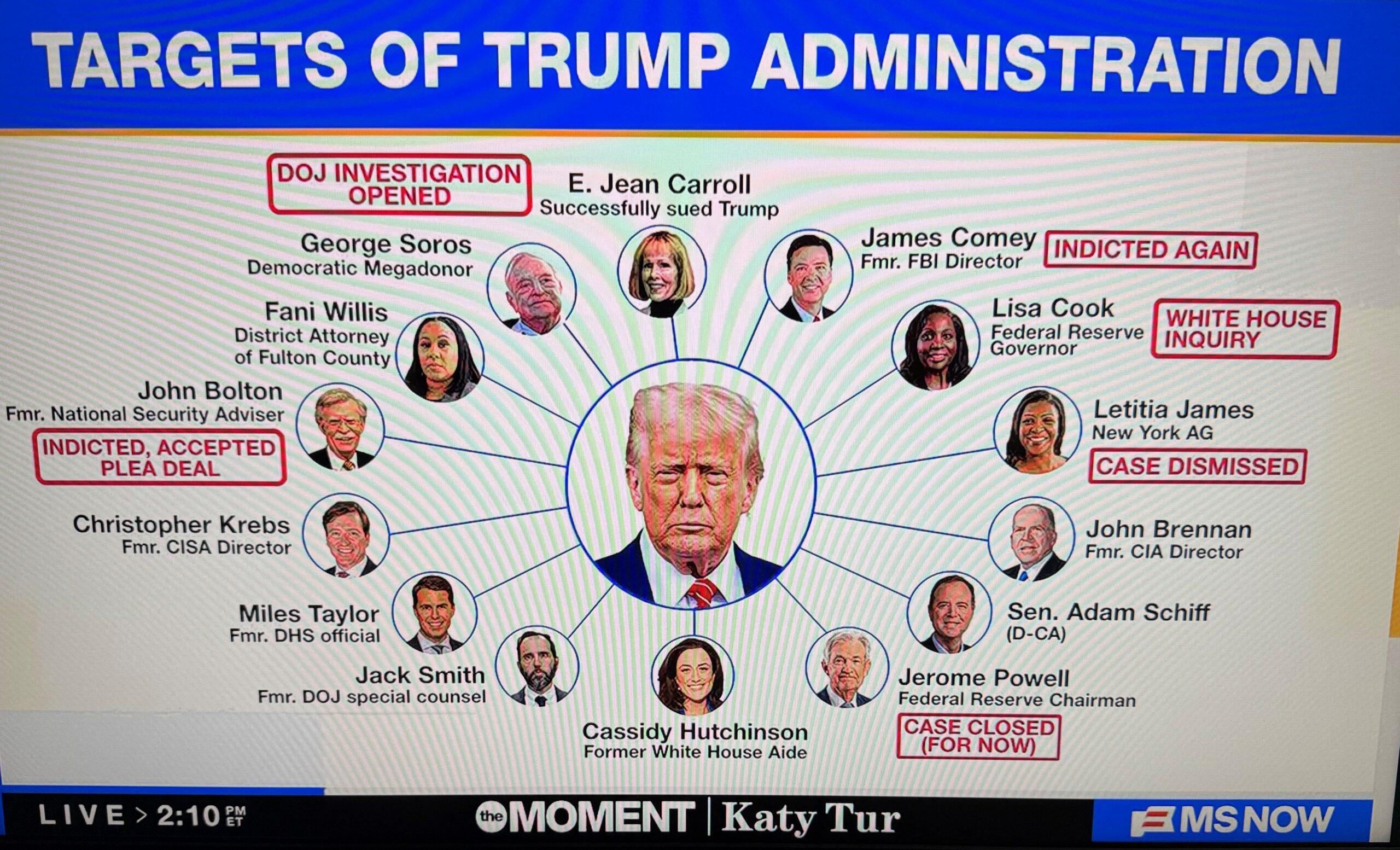
All The President’s Targets
October 13, 2026
Integrity Doesn’t Require a Megaphone
October 12, 2026
WHOSE PURPOSE DOES THIS SERVE?
October 9, 2026

Choreographer of Disaster
October 5, 2026
I Am Not a Politician, and I Have No Partisan Loyalties
October 2, 2026
A Man of Incorruptible Integrity
September 29, 2026

HUMAN VALUES: NOT SPECIFIED
September 23, 2026
You Can’t Do That.
September 21, 2026
I AM SICKENED
September 18, 2026
Read More Articles
The Latest... And Sometimes Greatest
The Courage to Defend a Principle
In 1998, at the height of the Clinton-Lewinsky scandal, Secret Service Director Lewis Merletti was driving to work when a radio report stopped him cold....
September 17, 2026
The Better Angels Among Us
By all appearances, we are becoming less the land of the brave than the land of resentment. Every day is Groundhog Day: same arguments, same...
September 14, 2026
We Remember
On September 11, 2001, nearly 3,000 people were killed in terrorist attacks in New York, at the Pentagon, and aboard Flight 93 in Pennsylvania. More...
September 11, 2026
Mister Roberts!
One of my favorite movies is Mister Roberts, the 1955 comedy-drama set aboard the USS Reluctant in the Pacific during World War II. Henry Fonda...
September 8, 2026
Where’s the Character
In 1984, Wendy’s ran a television commercial featuring the redoubtable Clara Peller, staring at an enormous hamburger bun. Inside was a burger patty smaller than...
August 7, 2026
It Was Important Then. It is Important Today
Freedom of speech in America is under attack, not only when people are denied the right to speak, but when lies, intimidation and the deliberate...
August 3, 2026