Published: October 15, 2010
By Jim Lichtman
On October 8, 2010, I posted a commentary regarding Snyder v. Phelps, a case currently before the U.S. Supreme Court in which the key question, as outlined by the court, is “Does the First Amendment protect protesters at a funeral from liability for intentionally inflicting emotional distress on the family of the deceased?”
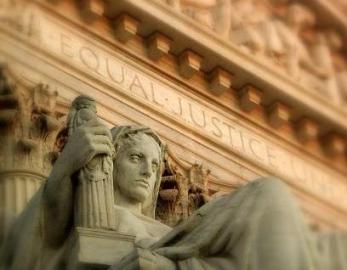
Among the comments I received, was this one that sided with the Westboro Church. “…the Snyders announced their son’s funeral in the local paper. As newspapers are considered a public forum I would argue that the Snyders made their son’s funeral a public event and therefore First Amendment protections apply.”
Another sided with the Snyder family. “The Snyder funeral was a private occasion for a private individual… You cannot say anything you want whenever and wherever you want without being held accountable… Private individuals and private ceremonies are not forums for public debate.”
Of the twelve responses, 9 sided with Snyder (privacy over speech); 2 stood by the Westboro Church, and 1 questioned the distance at which the protest was held, suggesting that the demonstration would be acceptable if an appropriate distance were maintained.
However, in reading the transcript and listening to the audio of the oral arguments before the court, Justice Breyer brought up an additional aspect and raised an interesting question.
JUSTICE BREYER: I’m not certain that this is about the funeral. …I understand there was a funeral in it, but the First Amendment question seems to me a different — possibly a broader and different question. Did your client see the signs? I gather from the record… he just saw tops of signs… which he saw at the funeral when the demonstrators were standing with the approval of the police, 300 feet away — how did he find out what they said?
MR. SUMMERS: (on behalf of Snyder) — by going to the family wake immediately following and seeing it on the television.
BREYER: So now we have two questions. One is, under what circumstances can a group of people broadcast on television something about a private individual that’s very obnoxious?… And the second is, to what extent can they put that on the Internet, where the victim is likely to see it? Either on television or by looking it up on the Internet.
Clearly, there was more to the Westboro protest than the group showing up on site. The church shot video of the event, made it available to local television as well as posting it on the Internet.
Ethicist Michael Josephson reminds us that “an ethical person often chooses to do more than the law requires and less than the law allows.”
Snyder v. Phelps places before us a choice between the legal right of free speech with the ethical value of respect.
From an ethical perspective, the choice is clear. The ethical value of respect is fundamental. We have a moral duty to honor each person’s right to autonomy, self-determination, privacy and dignity. In addition, the ethical value of caring places an additional obligation on us to, as Josephson writes, “consider and seek to advance the well-being of others, [and] that one should consciously cause no more harm than is reasonably necessary to perform one’s duties.”
Although some might interpret, “reasonably necessary” as a way to permit the Westboro protests at funerals, I would argue that Westboro had other means available to them to get their message out to the public. Newspaper, radio and TV announcements, as well as public rallies and speeches were all viable methods the church could have used rather than intrude on the privacy of a grieving family at a funeral service 300 feet away.
While it will be interesting to see how the Justices decide this case from a legal standpoint, I’m reminded of words from another Justice, Potter Stewart who wrote that, “Ethics is knowing the difference between what you have a right to do and what is right to do.”
Comments
Recent Commentaries
I Am Not a Politician, and I Have No Partisan Loyalties
October 2, 2026
A Man of Incorruptible Integrity
September 29, 2026

HUMAN VALUES: NOT SPECIFIED
September 23, 2026
You Can’t Do That.
September 21, 2026
I AM SICKENED
September 18, 2026
The Courage to Defend a Principle
September 17, 2026
The Better Angels Among Us
September 14, 2026
We Remember
September 11, 2026
Mister Roberts!
September 8, 2026
Where’s the Character
August 7, 2026
Read More Articles
The Latest... And Sometimes Greatest
It Was Important Then. It is Important Today
Freedom of speech in America is under attack, not only when people are denied the right to speak, but when lies, intimidation and the deliberate...
August 3, 2026
When Political Identity Replaces Ethical Judgment
The political and cultural landscape has become a minefield of conflicting beliefs, many now rooted less in public policy than in personal identity. One of...
July 31, 2026
Principles Matter.
A few nights ago, I was watching The Way We Were, a film I’ve seen more times than I can count. This time, a single...
July 28, 2026
All the President’s Men 2.0
“Politics had infiltrated every corner of government—a strong-arm takeover of the agencies by the Nixon White House.” —Bob Woodward and Carl Bernstein, All the President’s...
July 23, 2026
The Threat to November Is Already Here
“Cunning, ambitious, and unprincipled men will be enabled to subvert the power of the people and to usurp for themselves the reins of government.”—George Washington’s...
July 20, 2026
Jon Ossoff and the Conscience of Atticus Finch
I’ve written about Georgia Senator Jon Ossoff before, but after watching his questioning of Jay Clayton, President Trump’s nominee for director of national intelligence (DNI),...
July 17, 2026