Published: January 23, 2012
By Jim Lichtman
The fireworks from last Thursday’s Republican debate in South Carolina did not start with a candidate, but came, instead, from CNN moderator John King.
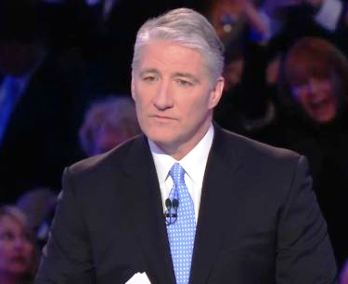
KING: As you know, your ex-wife gave an interview to ABC News and another interview with The Washington Post… In it, she says that you came to her in 1999, at a time when you were having an affair. She says you asked her, sir, to enter into an open marriage. Would you like to take some time to respond to that?
GINGRICH: No, but I will.
(APPLAUSE)
I think the destructive, vicious, negative nature of much of the news media makes it harder to govern this country, harder to attract decent people to run for public office. And I am appalled that you would begin a presidential debate on a topic like that.
(APPLAUSE)
Big mistake, John.
Gingrich came prepared and used the moment to maximum advantage to once again focus on a media that can, at times, be both biased and short-sighted, and the South Carolina crowd was with the former Speaker all the way.
In the ever-evolving political universe where virtually everything a candidate says is well-scripted, it can be daunting for a reporter to get at the truth. In a 2004 interview, CBS journalist Bob Schieffer said, “About all we interview any more are professional talkers…You don’t want to appear rude even though the guest can be filibustering and killing time…”
Nevertheless, getting at that truth is a reporter’s job.
“I am tired,” Gingrich continued in response to King, “of the elite media protecting Barack Obama by attacking Republicans.” More applause.
While Gingrich makes a good initial point, he loses here. The fact is the media did cover President Obama’s former pastor, Reverend Jeremiah Wright whose controversial sermons were the focus of much media attention to the scorn of the Democrats.
According to a heavily footnoted citation in Wikipedia, “Wright spoke of the United States taking land from the Indian tribes by what he labeled as terror, bombing Grenada, Panama, Libya, Hiroshima and Nagasaki, and argued that the United States supported state terrorism against the Palestinians and South Africa.”
“We bombed Hiroshima,” Wright said, “we bombed Nagasaki, and we nuked far more than the thousands in New York and the Pentagon, and we never batted an eye… and now we are indignant, because the stuff we have done overseas is now brought back into our own front yards. America’s chickens are coming home to roost.”
I’m afraid that the Republican debates are just the beginning of new and more far-reaching attacks not only from the candidates themselves, but from a media that, at times, seems more focused on getting a sound-bite than real information out to the public.
Nevertheless, journalists have an obligation to demonstrate respect to those individuals they interview. The powers of the press should be treated as a public trust. Journalists need to inspire the confidence of citizens by approaching topics for discussion in the proper forum.
Character in an elected official is important. Character in a presidential candidate is vital and fair for a reporter to pursue.
However, I would argue that it is topic for a one-on-one interview not a debate. A debate requires the moderator to moderate, focus on the substantive issues of the day: the economy, jobs, housing, foreign policy, etc. It’s not the job of the moderator to ask questions regarding a candidate’s personal life, even when that personal life comes in the form of an interview of a former wife whose unkind remarks can clearly be seen as biased. That’s the job of a reporter.
The powers of the press should be used responsibly to advance public interest without causing unjustified harm.
King is a good journalist who knows how to ask tough and important questions of candidates on both sides. He just needs to be reminded of the difference between a moderator and a reporter.
Comments

Recent Commentaries
An Easter Message That Matters
April 4, 2026
The Man Who Feared What We Might Become
March 30, 2026
Same Price. Same War. Different Truth
March 25, 2026

Who Writes This Stuff: Jim or A.I.?
March 23, 2026
Loyalty vs. Conscience
March 19, 2026

When Will This Madness End!?
March 18, 2026

When Government Threatens the Truth
March 16, 2026

Separating Fact from Rhetoric
March 12, 2026

Lindsay Vonn’s Gold Medal Moment
March 12, 2026

Teaching an Algorithm Right from Wrong
March 9, 2026
Read More Articles
The Latest... And Sometimes Greatest
Now, More Than Ever
In moments of national crisis, a nation discovers whether its founding principles are merely words on paper, or values worth defending. As the 150th anniversary...
March 6, 2026
Peace Is Not an Elective
I had just learned of the passing of a good friend and colleague, Colman McCarthy when the memories began to return. Before I ever met...
March 2, 2026
Revelations
In 1927, Sinclair Lewis gave America a character it did not want to recognize in the mirror: Elmer Gantry. Gantry is loud, magnetic, insatiable —...
February 26, 2026
The Story of Chips, and The Cost of Looking Away
It’s just a photograph: a wartime dog sitting alert, ears up, wearing a military harness. But the story about a World War II sentry dog...
February 23, 2026
It’s Time to Talk About Respect
A cancer has been growing in our national life, so embedded in our culture that we’ve stopped acknowledging it. In the 1940s and the decades...
February 18, 2026
Adversity and Perseverance
“How you climb a mountain is more important than reaching the top.”— Yvon Chouinard “Every new adjustment is a crisis in self-esteem”—Eric Hoffer “Retreat, Hell!...
February 16, 2026