Published: February 2, 2026
By Jim Lichtman
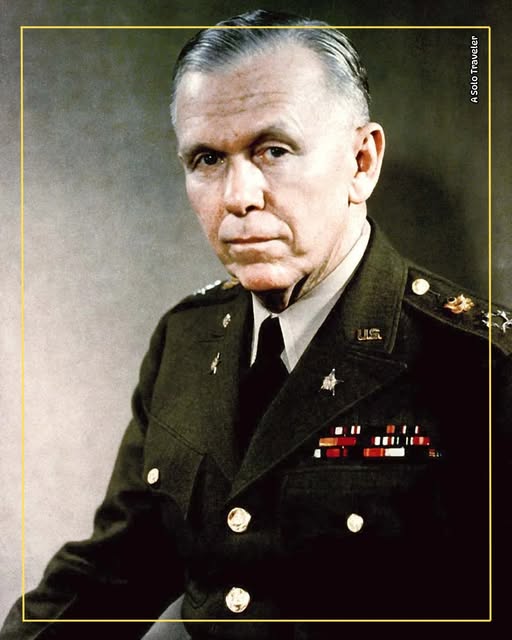
There are moments in history when power reveals its true character.
During World War II, no American general was more central to victory than George C. Marshall. As Army Chief of Staff, Marshall oversaw the most rapid military expansion in U.S. history, transforming a modest peacetime force into an army of more than eight million. He selected commanders, managed logistics across continents, and kept a fragile alliance together. Winston Churchill called him “the organizer of victory,” and he was right.
Yet Marshall never commanded troops in battle.
That was not an accident. It was a choice, one shaped by character.
As plans for the invasion of Europe took shape, President Franklin D. Roosevelt repeatedly asked Marshall what role he wanted. Leading the D-Day invasion was the assignment every general dreamed of. Marshall had spent years preparing for it. But each time Roosevelt asked, Marshall refused to advocate for himself.
Later, Marshall explained that he wanted the president to feel free to act solely in the nation’s interest, not burdened by his feelings or ambitions. Roosevelt ultimately chose Dwight D. Eisenhower to command the invasion, deciding he could not afford to lose Marshall in Washington.
Marshall accepted the decision without complaint and returned to his desk. No bitterness. The war was bigger than any one man, and he knew it.
In many ways, that moment defines Marshall’s legacy. He wielded immense authority yet never sought the spotlight. He understood that real leadership often means staying where the work is hardest and least visible.
After the war, Marshall faced a different challenge: Peace.
On June 5, 1947, now Secretary of State, he delivered an eleven-minute commencement address at Harvard University. It was described in advance as routine.
Marshall proposed what became known as the Marshall Plan: a bold commitment to rebuild Europe’s shattered economies, including former enemies like Germany and Italy. The policy was not driven by sentimentality. It was driven by hard-earned wisdom. Marshall had seen what desperation produces. He understood that the economic collapse following World War I had helped give rise to the Third Reich. He refused to repeat that mistake.
“Our policy,” Marshall said, “is directed not against any country or doctrine, but against hunger, poverty, desperation, and chaos.”
Congress listened. Not because the plan was politically easy… it wasn’t, but because Marshall was trusted. His integrity, built over decades of service without self-interest, carried the day.
The result reshaped the twentieth century. Europe recovered. Former enemies became partners. The seeds of lasting alliance were planted, not through domination, but through restraint and generosity.
In 1953, Marshall became the only soldier to receive the Nobel Peace Prize. When critics questioned whether a general could deserve such an honor, Marshall answered simply, “I have been given the opportunity of pointing out that the soldier’s record is written neatly in many ledgers whose columns are gravestones.” George Marshall never wrote memoirs. He never cashed in on his reputation. He simply served and stepped aside.
In an age obsessed with recognition and grievance, his life offers a quieter lesson: true power lies not in claiming credit, but in knowing when to let it go.
Comments

Recent Commentaries
An Easter Message That Matters
April 4, 2026
The Man Who Feared What We Might Become
March 30, 2026
Same Price. Same War. Different Truth
March 25, 2026

Who Writes This Stuff: Jim or A.I.?
March 23, 2026
Loyalty vs. Conscience
March 19, 2026

When Will This Madness End!?
March 18, 2026

When Government Threatens the Truth
March 16, 2026

Separating Fact from Rhetoric
March 12, 2026

Lindsay Vonn’s Gold Medal Moment
March 12, 2026
Teaching an Algorithm Right from Wrong
March 9, 2026
Read More Articles
The Latest... And Sometimes Greatest
Now, More Than Ever
In moments of national crisis, a nation discovers whether its founding principles are merely words on paper, or values worth defending. As the 150th anniversary...
March 6, 2026
Peace Is Not an Elective
I had just learned of the passing of a good friend and colleague, Colman McCarthy when the memories began to return. Before I ever met...
March 2, 2026
Revelations
In 1927, Sinclair Lewis gave America a character it did not want to recognize in the mirror: Elmer Gantry. Gantry is loud, magnetic, insatiable —...
February 26, 2026
The Story of Chips, and The Cost of Looking Away
It’s just a photograph: a wartime dog sitting alert, ears up, wearing a military harness. But the story about a World War II sentry dog...
February 23, 2026
It’s Time to Talk About Respect
A cancer has been growing in our national life, so embedded in our culture that we’ve stopped acknowledging it. In the 1940s and the decades...
February 18, 2026
Adversity and Perseverance
“How you climb a mountain is more important than reaching the top.”— Yvon Chouinard “Every new adjustment is a crisis in self-esteem”—Eric Hoffer “Retreat, Hell!...
February 16, 2026