Published: January 25, 2026
By Jim Lichtman
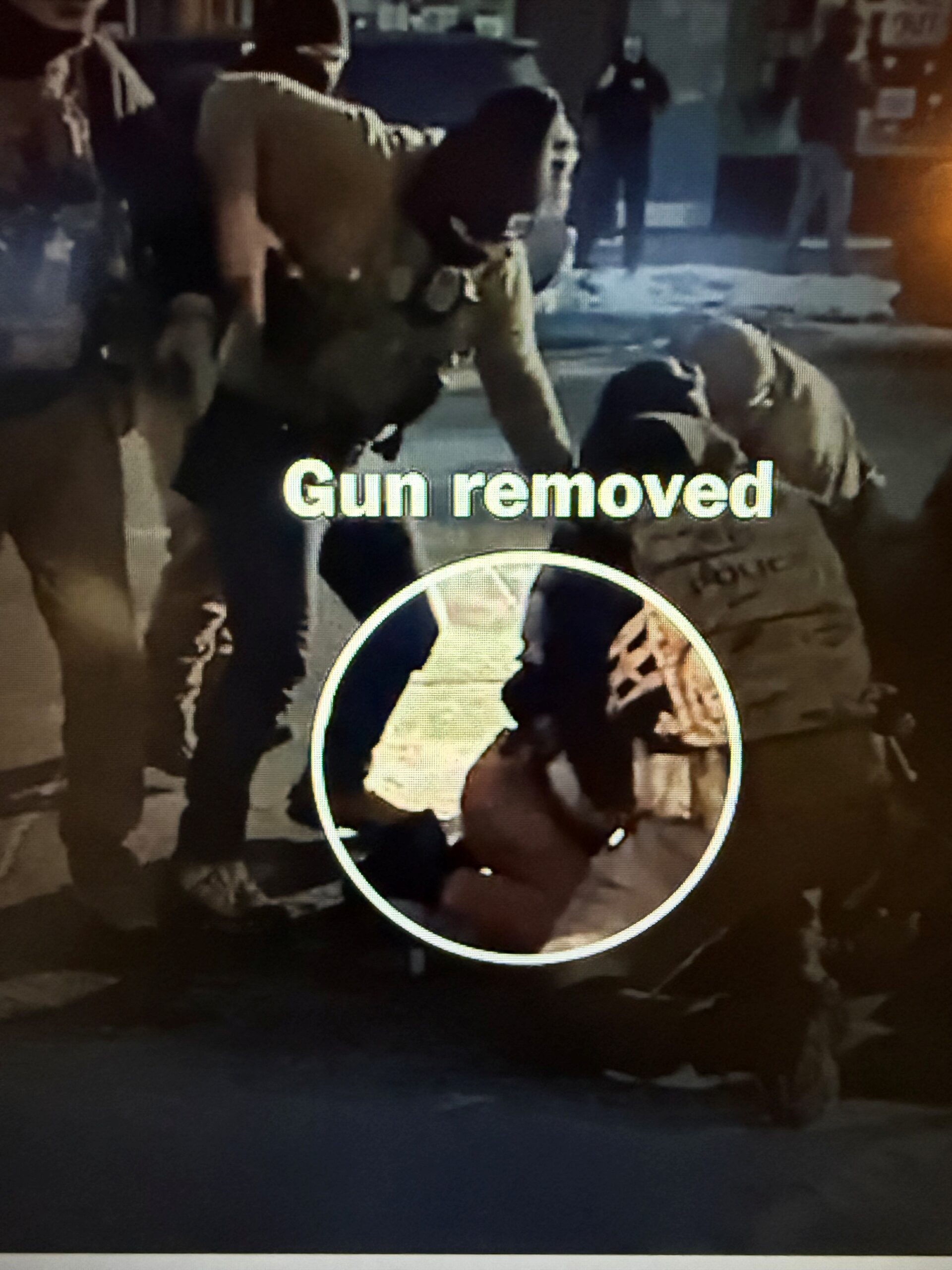

New information has now confirmed what many feared from the start: Alex Pretti was disarmed before he was shot—multiple times—by federal agents in Minneapolis. Whatever uncertainties once clouded this tragedy, that fact changes the moral terrain entirely.
This is no longer a case about split-second judgment under imminent threat. It is a case about what happens after the threat is gone, and whether power still remembers why it exists.
Pretti was not a fugitive. Not a target of an enforcement action. He was a 37-year-old ICU nurse, a caregiver by profession, who happened to be in the neighborhood where federal agents were conducting an immigration operation. He was carrying a legally owned firearm in a holster, as Minnesota law allows. But video and witness accounts now make clear that the weapon was removed from him during the confrontation; he was subdued and no longer armed when shots were fired.
And yet, he was shot repeatedly.
Watching the footage, I was sickened — sickened not only by the agents’ utter lack of judgment in continuing to fire after Pretti was disarmed, but also by Homeland Security Secretary Kristi Noem’s continued justification of this killing and her defense of the earlier shooting of Renée Good.
That fact matters — not because it resolves every legal question, but because it sharpens the ethical one. Law enforcement authority is not a blank check. It exists for a single purpose: to protect life, including the life of the person being restrained. When force continues after control is achieved, it ceases to be protection and becomes something else entirely.
Ethics begins where fear is supposed to end.
We often excuse violence by invoking chaos, danger, and the fog of confrontation. Those arguments rely on urgency. But once a person is disarmed, urgency dissolves. What remains is responsibility. And responsibility demands restraint.
The troubling pattern here is not only the shooting itself, but the reflex that followed it—the instinct to justify rather than to question. Initial statements emphasized that Pretti was armed, as if that alone could absolve what came next. But ethics does not operate on impressions or labels. It operates on sequence. What happened first matters. What happened after matters more.
Disarming someone is an assertion of control. Shooting them afterward is a declaration that control was never the goal.
This is why public trust erodes so quickly in moments like this. Communities are not naïve. They understand danger. What they cannot accept is force unmoored from necessity. When official narratives shift only after video emerges, when accountability follows exposure rather than principle, the damage extends far beyond a single incident.
It reaches the quiet, essential belief that power will stop when it should.
There is also a larger ethical question hovering over this case: why were heavily armed federal immigration agents operating in residential neighborhoods at all, conducting enforcement actions traditionally handled with coordination and transparency? When agencies expand their reach without expanding their accountability, the risk is not just operational—it is moral.
Alex Pretti’s death did not occur in isolation. It joins a growing list of incidents where the distance between authority and accountability has grown dangerously wide. Each time that gap widens, the burden shifts from the institutions sworn to protect us to the public forced to demand answers.
Ethics is not about hindsight perfection. It is about lines—clear, visible lines that must not be crossed. One of those lines is this: when the weapon is gone, the justification for lethal force must be gone with it.
Anything less is not enforcement. It is failure!
And when power fails to restrain itself, the cost is not only a life lost, but a trust that becomes harder, monumentally harder to restore.
THIS can’t be ignored. THIS is what Congress must investigate—now.
Comments

Recent Commentaries
Now, More Than Ever
March 6, 2026
Peace Is Not an Elective
March 2, 2026

Revelations
February 26, 2026
The Story of Chips, and The Cost of Looking Away
February 23, 2026

It’s Time to Talk About Respect
February 18, 2026

Adversity and Perseverance
February 16, 2026
Who Decides What’s Seen?
February 12, 2026
The Death of Shame
February 9, 2026

Because We Need It
February 5, 2026
Why George Marshall Still Matters
February 2, 2026
Read More Articles
The Latest... And Sometimes Greatest
The Most Sacred Thing
We toss the word “sacred” around as if it were a mood, something reserved for private faith. But in public life, “sacred” has a harder...
January 29, 2026
THIS Cannot Be Ignored
New information has now confirmed what many feared from the start: Alex Pretti was disarmed before he was shot—multiple times—by federal agents in Minneapolis. Whatever...
January 25, 2026
Year One
Not long ago, I stopped watching the national news. I told myself I was stepping away from the noise and the churn for some peace...
January 20, 2026
Removed
First an update: Not long ago, 60 Minutes, the CBS news program, pulled a segment a few hours before it was set to air. The...
January 18, 2026
Clarence Darrow’s Warning to a Tired Democracy
I first read Clarence Darrow for an American Jurisprudence class in college and have returned to his work several times since. He is widely regarded...
January 15, 2026
Accountability, Optional
On October 7, 2025, Pam Bondi, the nation’s chief law enforcement officer, appeared before a Senate oversight committee and refused to answer question after question,...
January 12, 2026