Published: June 30, 2010
By Jim Lichtman
How do you assess an individual for a position on the Supreme Court? What criteria do you use?
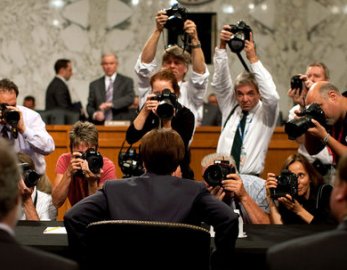
Do you focus solely on their political philosophy – conservative vs. liberal? Do you look for someone who will interpret the Constitution literally, or do you believe it to be, as some do, that it is a living document where definitions adjust based on societal needs and changes?
Many of the questions put to the current Supreme Court nominee Elena Kagan seem to focus largely on an attempt to determine her political philosophy.
Kagan has served as Dean of Harvard Law School and currently holds the position of United States Solicitor General. The Solicitor General’s job is to represent the U.S. Government in cases brought to the high court. Due to the working relationship between the two, the Solicitor General is sometimes referred to as the 10th Justice.
However, notwithstanding her current appointment, Kagan must sit through the fire that is the Senate Judiciary Committee. As Republican Senator Orin Hatch explained he and his colleagues “have to have a little back and forth sometimes or this place would be boring as hell.”
“It takes the spotlight off me,” Kagan replied.
“I’ve been informed that hell is not boring,” Hatch responded.
“Just hot,” Kagan added.
While many committee members try to pry open a clearly sealed box that is the nominee’s personal feelings both political and judicial, I would focus on character. “Take us through your decision-making process, Ms. Kagan. What is justice and explain how you would work to see that justice is served?”
Former Justice Potter Stewart once said, that “Fairness is what justice really is.”
From an ethical perspective, fairness means that an individual studies information with an objective, open-mind, is willing to consider conflicting perspectives before making a decision. Most importantly, fairness demonstrates a commitment to the equitable treatment of all individuals regardless of their background, color, creed or other potential biases unrelated to the facts.
However, “Fairness,” as ethicist Michael Josephson points out, “is one of the most elusive ethical values since, in most cases, stakeholder with conflicting interests sharply disagree on what is fair. Although some results are clearly unfair, rarely is there a single fair result. Thus, fairness often refers to a range of morally justifiable outcomes rather than discovery of the fair answer”; which is one reason why we have nine Supreme Court Justices examining a case rather than a single individual.”
At the end of the day, I would hope that the Senate would choose an individual based not only on experience, but on the content of a nominee’s character.
Educator and civil rights activist Booker T. Washington rightly said, “Character, not circumstances, makes the person.”
Comments


Recent Commentaries
It Was Important Then. It is Important Today
August 3, 2026
When Political Identity Replaces Ethical Judgment
July 31, 2026

Principles Matter.
July 28, 2026

All the President’s Men 2.0
July 23, 2026

The Threat to November Is Already Here
July 20, 2026
Jon Ossoff and the Conscience of Atticus Finch
July 17, 2026

Hearts and Minds
July 16, 2026

The Ethics of Belonging
July 14, 2026

The Best of Us
July 9, 2026
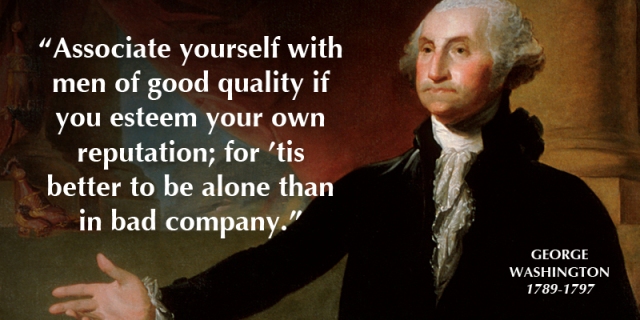
The Standard Washington Set
July 6, 2026
Read More Articles
The Latest... And Sometimes Greatest
Who We Were. Who We Are…
Today, America is 250 years old. This Fourth of July, amid deep national division, it seems worth asking a simple question: Which of our country’s...
July 4, 2026
Are We Still Worthy of What They Declared?
Conclusion: The Words That Made Us and Still Must. In December of 1776, the Revolution was not moving toward triumph. It was close to collapse....
July 3, 2026
Are We Still Worthy of What They Declared?
Part 2: Common Sense Are we still capable of that kind of clarity when it matters most? There was a moment in the birth of...
July 1, 2026
Are We Still Worthy of What They Declared?
For the most part, my high school history classes consisted of names, dates, documents, and battles. What I’ve learned since then — through historians like...
June 29, 2026
A Cautionary Tale: France Then, Washington Now
Lately, I’ve been reading more history, mostly to educate myself. But the other night, I opened Lord Acton’s Lectures on the French Revolution and didn’t...
June 25, 2026
Different Issues. Same Fear.
As our nation nears its 250th anniversary, an uneasy emotional connection to the past has returned—one rooted in fear, and the question of who gets...
June 22, 2026