Published: January 22, 2026
By Jim Lichtman
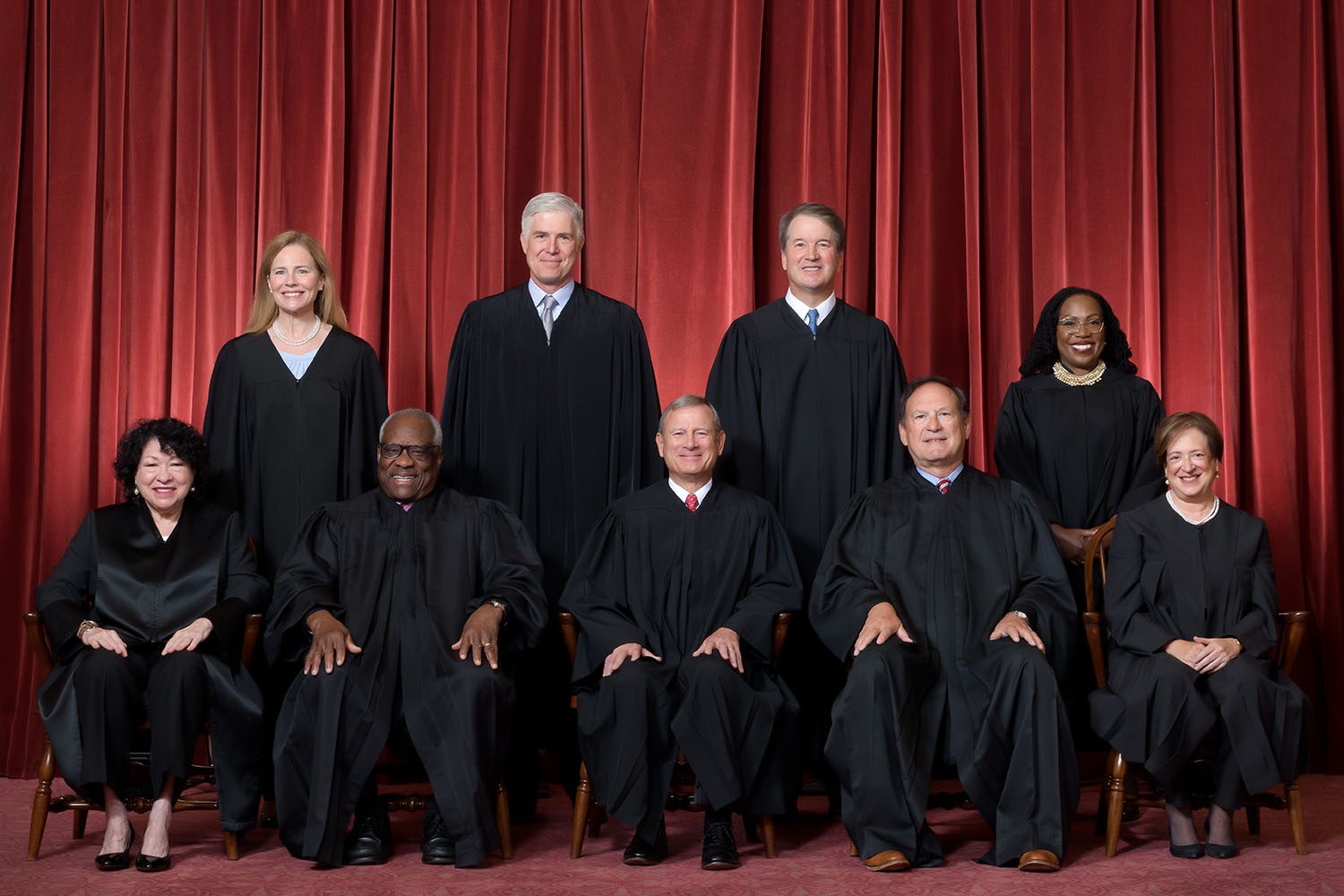
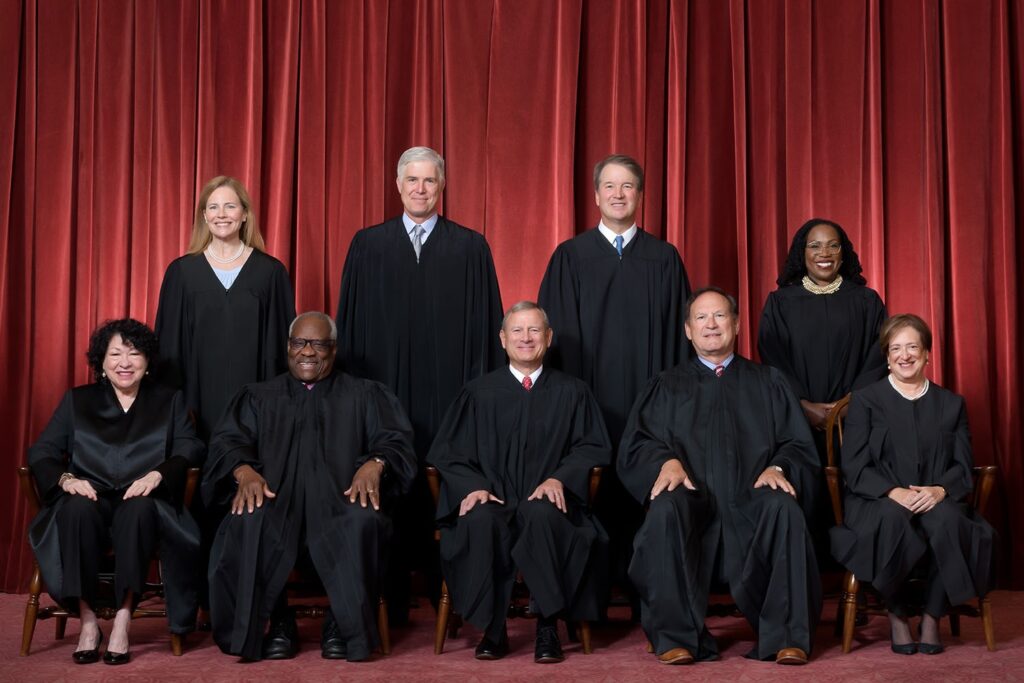
Credit: Fred Schilling, Collection of the Supreme Court of the United States
This week, the Supreme Court will consider President Trump’s attempt to fire Federal Reserve governor Lisa Cook. Separately, the Justice Department has issued subpoenas in a criminal investigation involving Fed Chair Jerome Powell. Together, they raise a more urgent question—why does the Court continue to tolerate such sweeping unilateral power in the presidency?
It’s the same question the Framers of our Constitution confronted without illusion:
How much power can one person be trusted to hold?
Today, some conservative justices answer that question by embracing a theory: the Unitary Executive Theory, the claim that all executive power belongs to the president alone, largely insulated from Congress and the courts. It is presented as “originalism,” as fidelity to the Constitution as written. But the historical record points elsewhere.
The Framers did want an active executive. They rejected weakness not as a theory, but as experience—they had lived with it. The Articles of Confederation produced paralysis and uncertainty. A single president promised decisiveness and, just as importantly, accountability. If something went wrong, the public would know where responsibility lay.
But unity was never meant to become supremacy.
The Constitution was never meant to be efficient. It was meant to hold power in check. Its central design, the separation of powers, exists not to speed things up, but to slow them down, to keep authority from settling in one place. The Framers understood what history teaches again and again: delay is inconvenient, but unchecked power is dangerous.
That fear shaped the presidency itself. Congress was given control of funding, authority to create and structure executive offices, the power to oversee administration, and the ultimate check of impeachment. These were not incidental features. They were essential guardrails. If the president were meant to command the executive branch without limit, Congress’s constitutional role in shaping it would make little sense.
Even the president’s duty to “take care that the laws be faithfully executed” runs counter to modern claims of dominance. Faithful execution does not mean bending the law to personal will. It means obedience to the law as written. In the language of the eighteenth century, “faithful” meant honest, impartial, and bound by duty, not free to command.
The first presidents did not behave as if they possessed unchecked authority. They consulted Congress, deferred to statutes, and accepted limits on their power.
The modern version of the Unitary Executive Theory is less a recovery of original meaning than a response to the modern frustration of bureaucracy, regulation, and oversight. It gained traction in the late twentieth century, shaped by backlash to Franklin Roosevelt’s New Deal and reinforced after Nixon’s Watergate. It reflects a desire for control more than a faithful reading of constitutional design.
The Framers understood something we too often forget: power does not require bad intentions to become dangerous. It requires certainty that one branch knows best. Certainty that speed matters more than accountability. They built a system that assumes human fallibility, not just in others, but in ourselves.
The presidency was meant to be strong, but never unbounded. Strong enough to act, restrained enough to answer to Congress and the people. The Framers did not design an executive above the law; they designed one bound to it.
In uncertain times, restraint can look like weakness and limits like inconvenience. But the Constitution asks more of us: not faith in power, but vigilance: power questioned, divided, and held to account, especially when it claims to speak for us.
The Framers understood this. The question now is whether the current Supreme Court majority still does.
Comments
Recent Commentaries
Year One
January 20, 2026

Removed
January 18, 2026
Clarence Darrow’s Warning to a Tired Democracy
January 15, 2026
Accountability, Optional
January 12, 2026
My Dinner with Jefferson, Hamilton and Madison
January 8, 2026

When the Story Becomes the Scandal
January 5, 2026

A Light from Christmas Past – Conclusion
December 24, 2025
A Light From Christmas Past – Part II
December 23, 2025

A Light from Christmas Past
December 22, 2025
Nothing Beside Remains
December 16, 2025
Read More Articles
The Latest... And Sometimes Greatest
Finding Common Ground, and Why It Matters
A national media organization has recognized the seriousness of our political division and offered something we’ve been missing… A REAL beginning toward ending the death...
December 15, 2025
What Dickens Meant Us to Remember
Every December, I look forward to reading and watching Dickens’ A Christmas Carol. While there are countless versions of the classic, I always return to...
December 11, 2025
Looking for America’s Soul
“At what point then is the approach of danger to be expected? I answer, if it ever reach us, it must spring up amongst us;...
December 8, 2025
Here We Are Again
CONTEMPT—Raw, in-your-face, unapologetic, and morally bankrupt. Every so often, the country reaches a point where character is not an abstraction but a requirement. We’re in...
December 5, 2025
The Steady Endurance of Leadership
I recently read about a group of explorers who located a ship deep beneath the dark, cold waters off Antarctica: a vessel whose very name...
December 1, 2025
Under the Wild Sky, We Gather
Wisconsin’s night sky opened to a rare sight, one usually reserved for places far colder and farther north—the Northern Lights. The colors pulled against each...
November 27, 2025