Published: November 6, 2025
By Jim Lichtman
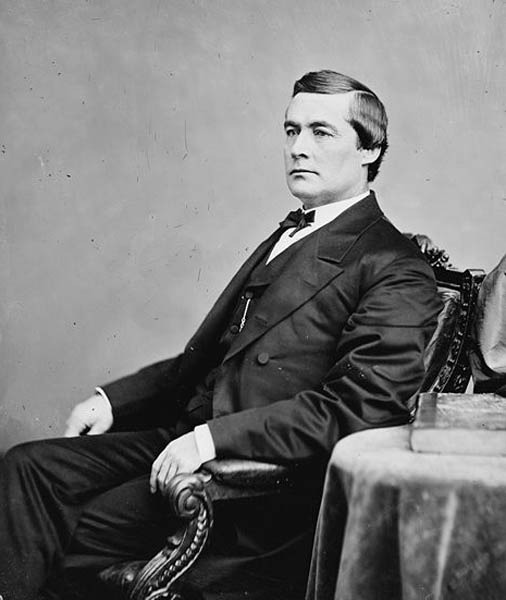
Republican Edmund G. Ross – LegendsOfKansas.com
Moments of character often define a person—sometimes even a nation.
I first came across Senator Ross’s story when reading President Kennedy’s Profiles in Courage. What I discovered was that political courage was as difficult then as it is today.
Throughout our history, politicians have faced those defining moments when principle collides with pressure, when conscience demands both courage and character. Few rise to the occasion. Fewer still do so knowing the cost.
In 1868, as the Senate prepared to decide the fate of President Andrew Johnson, Republican Senator Edmund G. Ross of Kansas stood at such a crossroads.
Three years after the Civil War, the country was still torn by divisions. Abraham Lincoln was gone, cut down by an assassin. His successor, Andrew Johnson, a Southern Democrat who had stayed loyal to the Union, found himself at odds with Congress. Radical Republicans, determined to punish the South, saw Johnson’s leniency as nothing but betrayal.
When Johnson tried to remove his Secretary of War, Edwin Stanton, Congress seized its chance. Articles of impeachment were drafted—not out of clear evidence of “high crimes and misdemeanors,”–but out of political vengeance.
The Senate trial was political theater at its best. Party leaders promised punishment for any Republican who wavered (Sound familiar). The final count stood but one vote short of the two-thirds majority required to remove the president from office. That one vote belonged to Edmund G. Ross of Kansas.
“I looked down into my open grave,” Ross later wrote, understanding that his political career would not survive a vote of conscience. Yet, believing that the charges were based more on politics than principle, Ross voted “not guilty.”
The backlash was immediate and merciless. He was vilified by his own party, ostracized in his home state, and denied renomination for the Senate (Think Liz Cheney). His reputation was shredded in the press.
Historians now agree that Ross’s vote preserved the constitutional balance between the executive and legislative branches. He defended not Andrew Johnson, but the office of the presidency itself from being subjugated to the whims of a partisan Congress. His stand became one of the earliest and clearest examples of principle over party.
Integrity is rarely convenient. It often demands sacrifice: sometimes reputation, sometimes livelihood. But as Ross’s story reminds us, it is the willingness to stand alone for what is right that defines character.
In times when party loyalty too often eclipses truth and conscience, we would do well to remember Edmund Ross, a man who, when the nation demanded a partisan verdict, chose instead to defend its principles.
Comments

Recent Commentaries
The Story of Chips, and The Cost of Looking Away
February 23, 2026

It’s Time to Talk About Respect
February 18, 2026

Adversity and Perseverance
February 16, 2026
Who Decides What’s Seen?
February 12, 2026
The Death of Shame
February 9, 2026
Because We Need It
February 5, 2026
Why George Marshall Still Matters
February 2, 2026
The Most Sacred Thing
January 29, 2026
THIS Cannot Be Ignored
January 25, 2026

Year One
January 20, 2026
Read More Articles
The Latest... And Sometimes Greatest
Removed
First an update: Not long ago, 60 Minutes, the CBS news program, pulled a segment a few hours before it was set to air. The...
January 18, 2026
Clarence Darrow’s Warning to a Tired Democracy
I first read Clarence Darrow for an American Jurisprudence class in college and have returned to his work several times since. He is widely regarded...
January 15, 2026
Accountability, Optional
On October 7, 2025, Pam Bondi, the nation’s chief law enforcement officer, appeared before a Senate oversight committee and refused to answer question after question,...
January 12, 2026
My Dinner with Jefferson, Hamilton and Madison
In June 1790, I attended an extraordinary dinner. Through a tear in the fabric of time, I found myself seated at a small table with...
January 8, 2026
When the Story Becomes the Scandal
For nearly sixty years, the CBS News program 60 Minutes has stood as one of the few remaining institutions in American journalism recognized as serious,...
January 5, 2026
A Light from Christmas Past – Conclusion
I’ll be back on January 5th. Later that night, Emily returned home, warmed her hands around a cup of tea, and set the original lantern...
December 24, 2025