Published: January 5, 2026
By Jim Lichtman
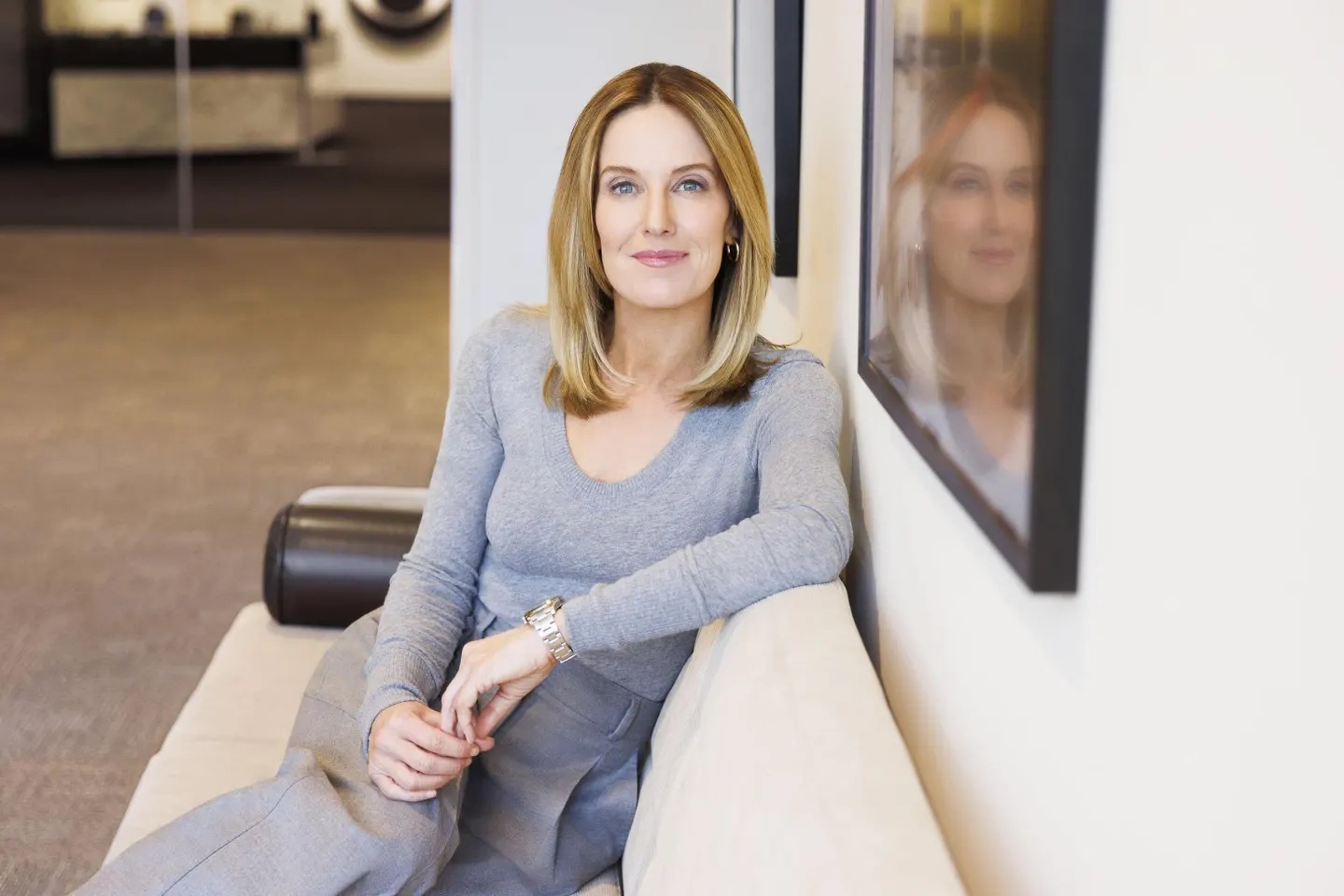

Sharyn Alfonsi, correspondent, at the 60 Minutes office in New York City.
Michele Crowe / CBS News
For nearly sixty years, the CBS News program 60 Minutes has stood as one of the few remaining institutions in American journalism recognized as serious, independent, and unafraid of difficult subjects. Its authority was never theatrical. It came from persistence, restraint, and the belief that citizens deserve to see uncomfortable facts and decide for themselves what they mean.
That legacy is precisely why the controversy surrounding its withdrawn segment on El Salvador’s CECOT prison deserves more than a passing glance.
The segment, reported by veteran correspondent Sharyn Alfonsi, examined the Terrorism Confinement Center—CECOT—built as part of El Salvador’s aggressive campaign against gang violence. Its most penetrating focus was on Venezuelan migrants deported from the United States and transferred to the facility. Former detainees described overcrowded cells, constant artificial light, deprivation of basic needs, and physical abuse. Their accounts were not isolated; they aligned with longstanding warnings from independent human-rights organizations that have documented serious concerns about conditions inside the prison.
This was not an exposé built on outrage. It followed the 60 Minutes template: firsthand testimony, corroboration, careful sourcing, and measured narration. The segment did not instruct viewers what to think. It presented what was known, acknowledged what was disputed, and allowed the audience to draw its own conclusions.
After multiple reviews by CBS Standards and Practices and the network’s legal team, the segment cleared all editorial hurdles and was formally scheduled for broadcast.
Then, roughly three hours before airtime, CBS News Editor-in-Chief Bari Weiss abruptly pulled the segment. Her reason was that more on-the-record responses from U.S. officials were needed. It sounded cautious on its face. In context, after full editorial and legal approval, it raised serious questions.
Requests for comments by government officials had been made. They declined. That is not unusual. Journalism has never treated refusal as a reason to withhold a vetted investigation. It reports the refusal and proceeds.
The controversy deepened when the segment briefly appeared online through an international distribution error. Viewers and myself, who watched the segment were struck not by aggressiveness, but by restraint. The reporting was disciplined. The tone was careful. What aired looked like journalism doing exactly what it has long claimed to do: report the facts without fear or favor.
At that point, the story shifted. The focus moved from conditions inside a foreign prison to conditions inside an American newsroom. Journalism itself became the subject.
That shift matters. Journalism rests not only on accuracy, but on institutional confidence, the confidence to stand behind work that meets standards even when it makes people uncomfortable.
This was not the first time 60 Minutes confronted such a moment.
In 1995, 60 Minutes withheld its interview with Dr. Jeffrey Wigand, a senior tobacco executive who revealed that cigarettes were engineered to addict, and that the harm was known. The facts were solid. The science was clear. Yet the segment was pulled, citing legal risk. The story did not disappear; it was pushed out of the light until public pressure forced it back.
Wigand paid a heavy price. He lost his job, his security, his reputation, and nearly his family. The industry did not challenge his evidence; it attacked his character. What distinguished Wigand was not heroics, but conscience.
The CECOT episode follows the same ethical arc. The images exist. The testimony exists. The questions are not speculative. Men are detained indefinitely, without due process, under horrific conditions that demand scrutiny. Coverage hesitates not because facts are unclear, but because implications are uncomfortable.
The CECOT segment raised serious questions about immigration policy, international detention, and confinement beyond public view. Reasonable people may disagree about the conclusions of the story and that’s the point. Democracies rely on disagreement informed by solid facts, not silence imposed by pressure.
For decades, 60 Minutes earned its standing by trusting viewers to think for themselves. When journalism is compelled to step back, the story does not disappear. It is pushed out of the light.
And when silence replaces reporting, the public is left not with answers, but with uncertainty about who decides what we are allowed to see.
60 Minutes journalist Sharyn Alfonsi announced she will be stepping down from her role on the news show.
Comments

Recent Commentaries
Now, More Than Ever
March 6, 2026
Peace Is Not an Elective
March 2, 2026
Revelations
February 26, 2026
The Story of Chips, and The Cost of Looking Away
February 23, 2026

It’s Time to Talk About Respect
February 18, 2026
Adversity and Perseverance
February 16, 2026
Who Decides What’s Seen?
February 12, 2026
The Death of Shame
February 9, 2026

Because We Need It
February 5, 2026
Why George Marshall Still Matters
February 2, 2026
Read More Articles
The Latest... And Sometimes Greatest
The Most Sacred Thing
We toss the word “sacred” around as if it were a mood, something reserved for private faith. But in public life, “sacred” has a harder...
January 29, 2026
THIS Cannot Be Ignored
New information has now confirmed what many feared from the start: Alex Pretti was disarmed before he was shot—multiple times—by federal agents in Minneapolis. Whatever...
January 25, 2026
Year One
Not long ago, I stopped watching the national news. I told myself I was stepping away from the noise and the churn for some peace...
January 20, 2026
Removed
First an update: Not long ago, 60 Minutes, the CBS news program, pulled a segment a few hours before it was set to air. The...
January 18, 2026
Clarence Darrow’s Warning to a Tired Democracy
I first read Clarence Darrow for an American Jurisprudence class in college and have returned to his work several times since. He is widely regarded...
January 15, 2026
Accountability, Optional
On October 7, 2025, Pam Bondi, the nation’s chief law enforcement officer, appeared before a Senate oversight committee and refused to answer question after question,...
January 12, 2026