Published: May 16, 2025
By Jim Lichtman
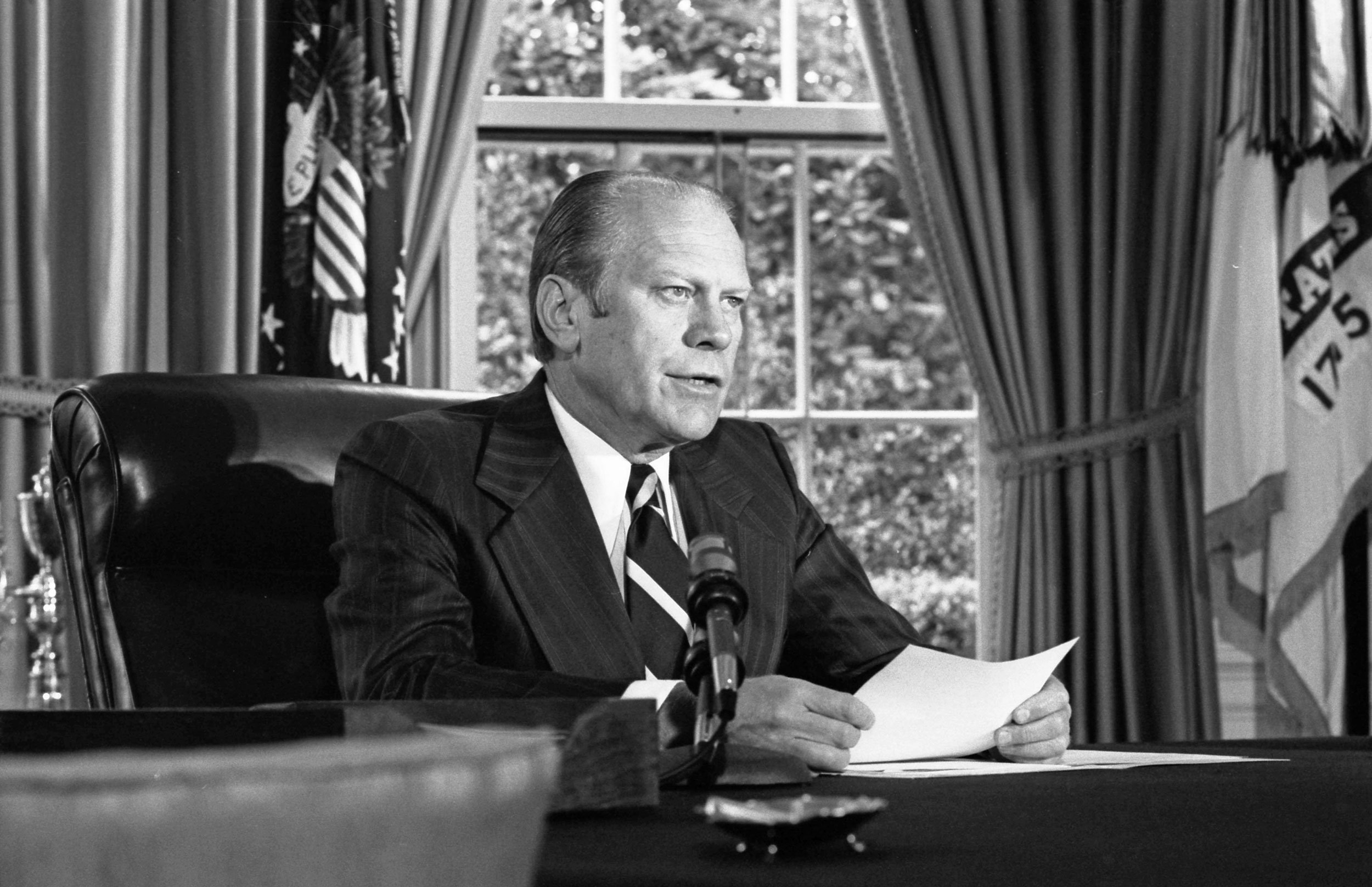

I met President Gerald Ford while working at KMIR-TV in Palm Springs. The event was held at the home of a wealthy supporter in Thunderbird Heights, high above Rancho Mirage. It was one of those orchestrated press gatherings, but Ford made it feel different. As he made his way down a line of reporters—and this lowly cameraman—he didn’t just shake hands and move on. He stopped and talked—really talked—to each of us. What struck me wasn’t what he said, but how he said it. Friendly. Engaged. He treated us like individuals, not a routine.
When Gerald R. Ford took the oath of office on August 9, 1974, he became president under the most extraordinary of circumstances in American history. The Watergate scandal forced Richard Nixon’s resignation.
“Our long national nightmare is over,” he told the country. In a moment of national disillusionment, Ford promised something simple but rare: “Truth is the glue that holds government together.”
However, he is more remembered for these words:
“I grant a full, free, and absolute pardon unto Richard Nixon for all offenses against the United States which he…has committed or may have committed or taken part in during the period from January 20, 1969 through August 9, 1974.”
The criticism came fast and hard. Editorials condemned it. Polls tanked. Many Americans felt cheated of accountability. But Ford believed that dragging Nixon through a criminal trial would keep the country stuck in the past, unable to move forward. “I was absolutely convinced,” he later said, “that if we had had [a] trial of Richard Nixon, the attention of virtually every element of the government would have been diverted from the problems we have to solve.”
Ford wasn’t polished in the usual political sense. But he was steady, decent and honest. He walked into the most thankless job in America during one of its most divided times—when inflation was surging and trust in government had bottomed out. He didn’t duck the hard choices. He faced the fallout from Nixon’s resignation and made a decision most people wouldn’t have had the backbone to make.
Ford didn’t issue the pardon to protect Nixon. He did it to protect the presidency. He knew it would be unpopular, and he did it anyway. That’s leadership. That’s character.
In accepting the John F. Kennedy Profiles in Courage Award in 2001, Ford reflected on the decision:
“I was not motivated by compassion for Richard Nixon. I was thinking of the country. I was thinking of 260 million Americans and what was best for them.”
That line alone should serve as a benchmark for public service.
A few days after the press meeting in Rancho Mirage, Ford came to the station to record a public service announcement. I was running the camera and holding cue cards. During a break in taping, I had to ask him myself.
It was just Ford, two Secret Service agents, and me in the studio. I stood about 12 feet from him.
“I apologize, Mr. President, but I need to ask for myself.”
“Ask me anything, Jim.”
I leaned in close. Almost a whisper. “Was there a deal?”
He didn’t flinch. Didn’t raise his voice. Wasn’t defensive. Looked me straight in the eye. “Jim, there was never any deal of any kind. The country had been through enough. It was time to move on.”
And I believed him.
He wasn’t looking for applause. He was trying to do what was right.
That’s what stayed with me. Still does.
* * *
Across two centuries, these five presidents—Washington, Roosevelt, Eisenhower, Carter, and Ford—brought more than policies to the Oval Office. They brought character. Each, in their own time, faced moments when power could be used for personal gain or public good, and each chose the latter.
What they offered was something far more enduring than policies–they brought moral clarity in moments of national uncertainty. Their leadership wasn’t measured by how long they held power, but by how responsibly they exercised it. And in doing so, they remind us that the presidency is not a prize—it’s a trust.
Comments
Recent Commentaries
Choreographer of Disaster
October 5, 2026
I Am Not a Politician, and I Have No Partisan Loyalties
October 2, 2026
A Man of Incorruptible Integrity
September 29, 2026

HUMAN VALUES: NOT SPECIFIED
September 23, 2026
You Can’t Do That.
September 21, 2026
I AM SICKENED
September 18, 2026
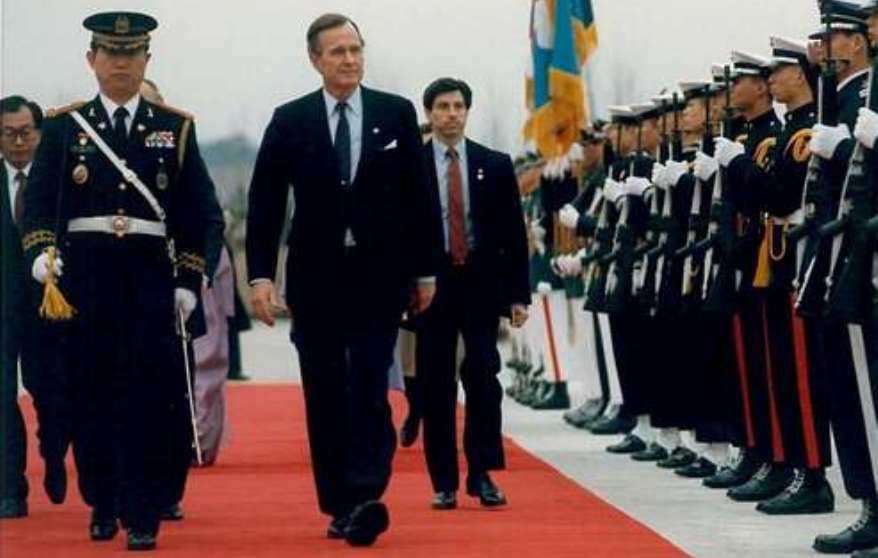
The Courage to Defend a Principle
September 17, 2026
The Better Angels Among Us
September 14, 2026
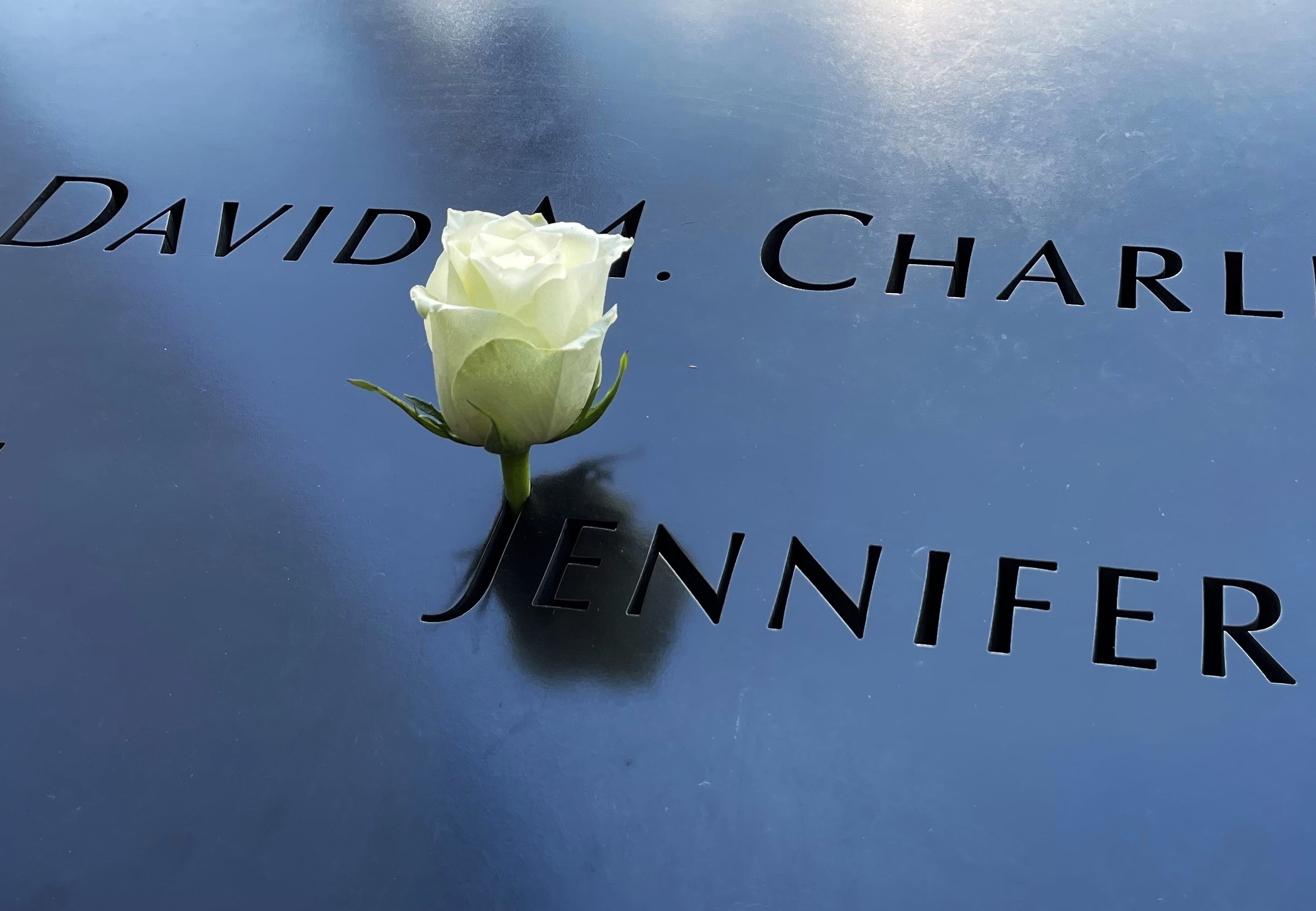
We Remember
September 11, 2026
Mister Roberts!
September 8, 2026
Read More Articles
The Latest... And Sometimes Greatest
Where’s the Character
In 1984, Wendy’s ran a television commercial featuring the redoubtable Clara Peller, staring at an enormous hamburger bun. Inside was a burger patty smaller than...
August 7, 2026
It Was Important Then. It is Important Today
Freedom of speech in America is under attack, not only when people are denied the right to speak, but when lies, intimidation and the deliberate...
August 3, 2026
When Political Identity Replaces Ethical Judgment
The political and cultural landscape has become a minefield of conflicting beliefs, many now rooted less in public policy than in personal identity. One of...
July 31, 2026
Principles Matter.
A few nights ago, I was watching The Way We Were, a film I’ve seen more times than I can count. This time, a single...
July 28, 2026
All the President’s Men 2.0
“Politics had infiltrated every corner of government—a strong-arm takeover of the agencies by the Nixon White House.” —Bob Woodward and Carl Bernstein, All the President’s...
July 23, 2026
The Threat to November Is Already Here
“Cunning, ambitious, and unprincipled men will be enabled to subvert the power of the people and to usurp for themselves the reins of government.”—George Washington’s...
July 20, 2026