Published: July 24, 2025
By Jim Lichtman
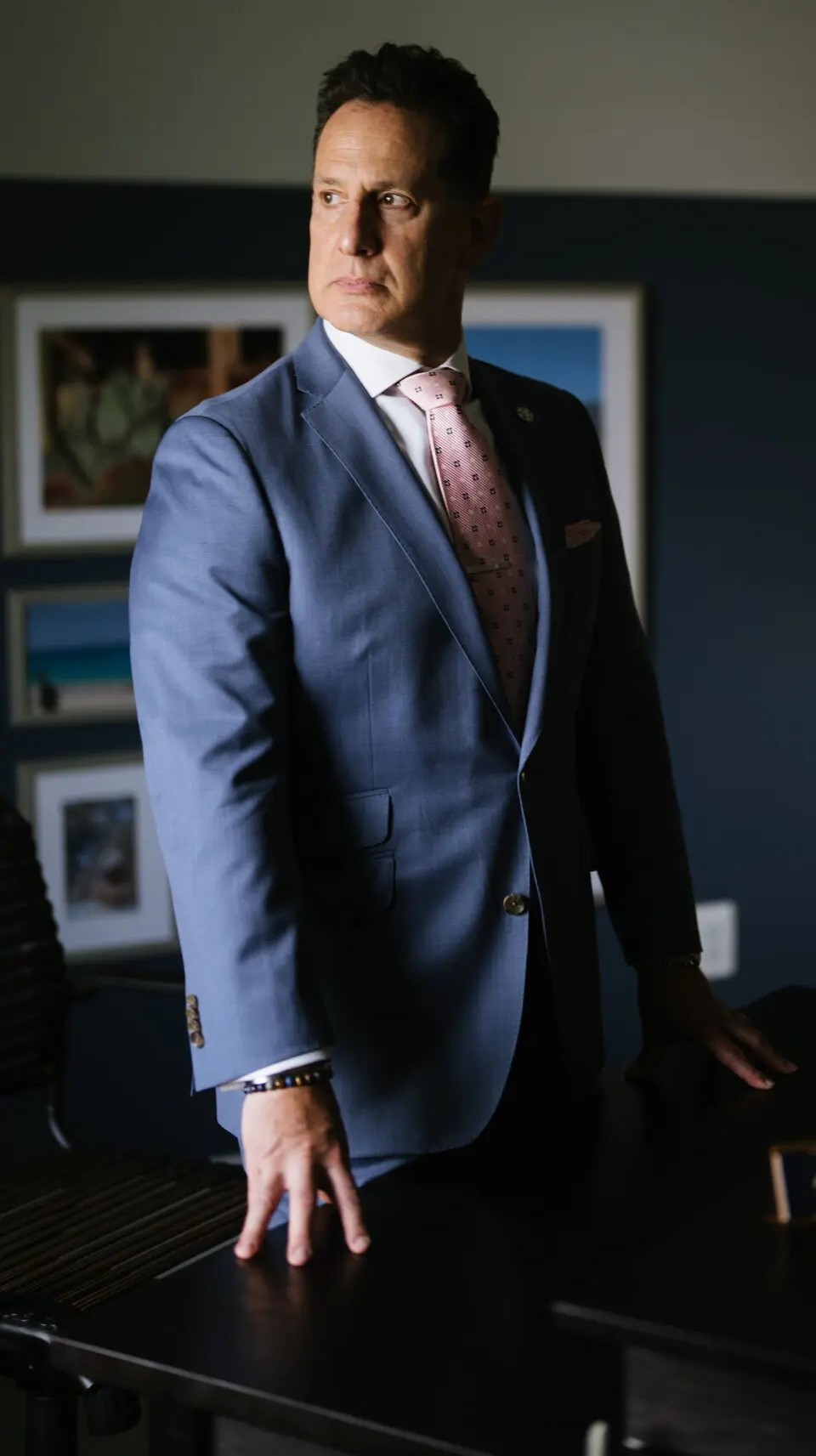
Mark Greenblatt, the former inspector general for the Interior Department, was fired by President Trump in January. Photo: Erin Schaff/The New York Times
If I had my way, every candidate who wins a primary election for public office—from Congress to the presidency—would be required to pass through a civic and ethical checkpoint before taking the oath.
First, they would be required to read the Constitution—actually read it—and then pass a test on its key components. Not just the Bill of Rights, but the checks and balances, the powers of each branch, and the fundamental principles that underpin our democracy. Afterward, they would sign a public statement affirming their ethical obligation to uphold the Constitution—not just in letter, but in spirit.
I’d ask them what Thomas Jefferson meant when he wrote “We the People…”
Washington was once about service to the people. Today, it’s about power. Service comes in a distant second and ethics is MIA—missing in action.
In 1887, British historian and moralist Lord Acton warned, “Power tends to corrupt, and absolute power corrupts absolutely.”
We are now living in the 19th century.
Fortunately, we still have Inspectors General—public servants who investigate waste, fraud, and abuse across every federal agency. They’re not partisan. They’re not political. They’re the conscience of government, charged with protecting the public’s trust—not a president’s agenda. Their role is grounded in one of the most fundamental principles of ethics: accountability.
But that conscience is under attack.
According to The New York Times, “the Trump administration systematically removed IGs who raised too many questions. When one watchdog at the Department of Education asked for information on how budget cuts were affecting students and teachers, she was stonewalled. Then she was demoted.”
The message was clear: ask the wrong questions, and you could be next.
Fear has been weaponized, used to intimidate the very people tasked with holding government accountable. One whistleblower told Congress, the Times reported, that morale was “basically in the toilet; everybody is terrified they’re getting fired.”
Now, under discussions of reinstating “Schedule F,” Trump allies have suggested that up to thousands of federal employees could be reclassified as “at-will,” making them easier to remove if they’re seen as disloyal to the president’s agenda. Supporters call it streamlining. In truth, it guts the merit system, compromises ethical neutrality, and injects raw politics where independent oversight is essential.
Recently, a federal judge acknowledged that the firings of several Inspectors General were likely illegal. But reinstating them, she ruled, would be futile—they could simply be fired again. The lawsuit continues. The message lingers.
This isn’t just a bureaucratic squabble. It’s an ethical crossroads.
If we silence the conscience of government, who’s left to speak truth to power?
Inspectors General don’t serve a party. They serve the people. Without them, accountability collapses. And without accountability, public trust erodes—slowly at first, then all at once.
The deeper question is this: Who will have the conscience and courage to stand up—at the cost of their job and reputation—when democracy needs them most?
Because when ethics are pushed aside, democracy doesn’t just suffer—it begins to fail.
Comments

Recent Commentaries

HUMAN VALUES: NOT SPECIFIED
September 23, 2026
You Can’t Do That.
September 21, 2026
I AM SICKENED
September 18, 2026
The Courage to Defend a Principle
September 17, 2026
The Better Angels Among Us
September 14, 2026
We Remember
September 11, 2026
Mister Roberts!
September 8, 2026
Where’s the Character
August 7, 2026
It Was Important Then. It is Important Today
August 3, 2026
When Political Identity Replaces Ethical Judgment
July 31, 2026
Read More Articles
The Latest... And Sometimes Greatest
Principles Matter.
A few nights ago, I was watching The Way We Were, a film I’ve seen more times than I can count. This time, a single...
July 28, 2026
All the President’s Men 2.0
“Politics had infiltrated every corner of government—a strong-arm takeover of the agencies by the Nixon White House.” —Bob Woodward and Carl Bernstein, All the President’s...
July 23, 2026
The Threat to November Is Already Here
“Cunning, ambitious, and unprincipled men will be enabled to subvert the power of the people and to usurp for themselves the reins of government.”—George Washington’s...
July 20, 2026
Jon Ossoff and the Conscience of Atticus Finch
I’ve written about Georgia Senator Jon Ossoff before, but after watching his questioning of Jay Clayton, President Trump’s nominee for director of national intelligence (DNI),...
July 17, 2026
Hearts and Minds
There’s a moment in Cool Hand Luke when Luke, played by Paul Newman, is returned to a prison camp after escaping. Determined to break his...
July 16, 2026
The Ethics of Belonging
I recently read a book by a man who has learned some of life’s hardest lessons and, by his own account, is still learning them...
July 14, 2026