Published: October 25, 2010
By Jim Lichtman
There’s a very old fable of unknown origin that goes something like this…
A scorpion comes upon a river and asks a friendly frog for a ride to the other side. The frog laughs and says something like, “Are you nuts? You’re a scorpion. You’ll sting me!”
The scorpion replies, “Why would I do that? If I sting you, we’ll both go down.”
The frog shrugs in agreement and begins to carry the scorpion across the river. Halfway to the other side however, the scorpion stings the frog, dooming them both. Just before they go under, the frog asks, “Why?” to which the scorpion replies, “I’m a scorpion; it’s my nature.”
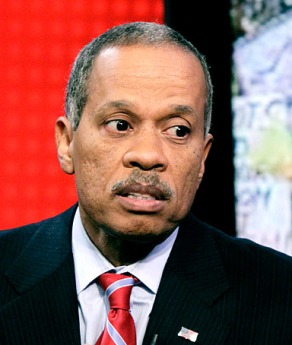
A variation of that story played out last week when National Public Radio fired news analyst Juan Williams for comments he made about Muslims to Bill O’Reilly on Fox’s The O’Reilly Factor, last Monday (Oct. 18).
O’Reilly asked Williams if America had a “Muslim dilemma.” “The cold truth is that in the world today, jihad, aided and abetted by some Muslim nations, is the biggest threat on the planet.”
“I mean, look, Bill,” Williams said, “I’m not a bigot. You know the kind of books I’ve written about the civil rights movement in this country. But when I get on the plane, I got to tell you, if I see people who are in Muslim garb and I think, you know, they are identifying themselves first and foremost as Muslims, I get worried. I get nervous.”
To begin with, O’Reilly is a self-absorbed provocateur, a professional malcontent whose chief objective is getting a controversial, on-air reaction from anyone he interviews. Anyone who saw his recent dust-up on ABC’s The View knows this first-hand. There’s always a sly smile on O’Reilly’s face when he sees the reaction he’s getting from people. But that’s an issue for another day.
Then there’s Williams’ statement itself that might indicate that the news analyst has a bias against Muslims. However, acknowledging a feeling – worry, nervousness – is not the same as actively demonstrating disrespect or bias.
Nonetheless, public speaking is an act, and if you are a public figure, your words carry influence and can hurt. Like it or not, Williams is a public figure, and as such should have attempted to steer the conversation into a discussion about profiling. To his credit, Williams tried to bring some clarity to his own comments but was continually shut down by O’Reilly’s habitual style of talking over his own guests. In the case of last Monday’s show, three people were talking at once!
Then, there’s the reaction by NPR’s management.
CEO Vivian Schiller said that “News analysts may not take personal public positions on controversial issues; doing so undermines their credibility as analysts, and that’s what’s happened in this situation.”
NPR does have a comprehensive ethics code. Under section four, “Conflicts of Interest,” it states:
“1. Conducting ourselves in a manner that inspires confidence in us as independent and fair means avoiding actual and apparent conflicts of interest or engaging in outside activities, public comment or writing that calls into question our ability to report fairly on a subject.
“2. A conflict of interest in its simplest dictionary term is a conflict between the private interests and the professional responsibilities of a person in a position of trust… All of us are in positions of trust with our audience. To maintain that trust requires that there be no real or perceived overlap between the private interests and opinions of NPR journalists and their professional responsibilities.”
Under those rules, Mr. Williams violated the principle of trust between himself and his audience. By publically implying that fear of Muslims was somehow acceptable, he put into question his ability to report fairly on any story relating to Muslims in his professional duties at NPR.
On the surface, it looks as if NPR could have handled the whole mess much better than they did, but ultimately made the right call in firing Williams. But there’s another question that’s been largely ignored. Why did NPR grant permission for Williams to repeatedly appear on The O’Reilly Factor knowing O’Reilly’s M.O.?
Alicia Shepard, NPR’s Ombudsman, writes in her blog, “This was far from an isolated incident.
“Management said [Williams had] been warned several times that O’Reilly is a professional provocateur and to be careful.
“In early 2009, Williams said on O’Reilly of Michelle Obama: ‘She’s got this Stokely Carmichael-in-a-designer-dress thing going. If she starts talking . . . her instinct is to start with this blame America, you know, I’m the victim. If that stuff starts coming out, people will go bananas and she’ll go from being the newJackie O.to being something of an albatross.’”
After on-air comments like that, why didn’t NPR rescind Williams’ permission to go on O’Reilly’s show? Why would they continue to put the news analyst and their own credibility in harm’s way?
While Juan Williams’ statement to O’Reilly calls into question the news analyst’s trust and credibility, NPR raised their own questions of credibility in allowing him to opinionate on Fox to begin with.
In my version of the Scorpion and the Frog, NPR is the frog who, in spite of clear and convincing evidence to the contrary, continued to put O’Reilly on their back.
As O’Reilly might say, “I’m O’Reilly; it’s my nature!”
Comments
Recent Commentaries
The Most Sacred Thing
January 29, 2026
THIS Cannot Be Ignored
January 25, 2026
Year One
January 20, 2026

Removed
January 18, 2026
Clarence Darrow’s Warning to a Tired Democracy
January 15, 2026
Accountability, Optional
January 12, 2026
My Dinner with Jefferson, Hamilton and Madison
January 8, 2026

When the Story Becomes the Scandal
January 5, 2026

A Light from Christmas Past – Conclusion
December 24, 2025
A Light From Christmas Past – Part II
December 23, 2025
Read More Articles
The Latest... And Sometimes Greatest
A Light from Christmas Past
In the winter of his century, Charles Dickens walked a London powered by industry but running short on warmth. People moved past one another as...
December 22, 2025
Nothing Beside Remains
I have stopped watching national news about Donald Trump because the coverage now mirrors the damage itself. What once informed now exhausts; what once clarified...
December 16, 2025
Finding Common Ground, and Why It Matters
A national media organization has recognized the seriousness of our political division and offered something we’ve been missing… A REAL beginning toward ending the death...
December 15, 2025
What Dickens Meant Us to Remember
Every December, I look forward to reading and watching Dickens’ A Christmas Carol. While there are countless versions of the classic, I always return to...
December 11, 2025
Looking for America’s Soul
“At what point then is the approach of danger to be expected? I answer, if it ever reach us, it must spring up amongst us;...
December 8, 2025
Here We Are Again
CONTEMPT—Raw, in-your-face, unapologetic, and morally bankrupt. Every so often, the country reaches a point where character is not an abstraction but a requirement. We’re in...
December 5, 2025