Published: January 19, 2011
By Jim Lichtman
Last Wednesday, President Obama spoke in words elegiac at the memorial for the shooting victims in Tucson, Arizona. Four days later, John McCain wrote a great op-ed that appeared in The Washington Post.
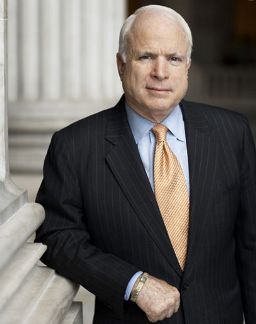
“President Obama gave a terrific speech Wednesday night,” the Republican Senator wrote. “He encouraged every American who participates in our political debates – whether we are on the left or right or in the media – to aspire to a more generous appreciation of one another and a more modest one of ourselves…
“We should respect the sincerity of the convictions that enliven our debates,” McCain said, “but also the mutual purpose that we and all preceding generations of Americans serve: a better country; stronger, more prosperous and just than the one we inherited.”
In one clear, unambiguous sentence, McCain summarized the respect, fairness and citizenship all of us should remember and aspire to demonstrate no matter which side of the issue we stand on.
“We Americans have different opinions on how best to serve that noble purpose… But we should be mindful as we argue about our differences that so much more unites than divides us. We should also note that our differences, when compared with those in many, if not most, other countries, are smaller than we sometimes imagine them to be.”
Mr. McCain effectively prompts us to be “mindful” about howwe argue out the differences we have, and points out the very real perspective that compared to other, less fortunate countries, those differences are much “smaller.”
Mr. McCain then takes the unusual (for others, not for McCain), step in calling out those who claim that President Obama does not have the best interests of the country at heart.
“I reject accusations that his policies and beliefs make him unworthy to lead America or opposed to its founding ideals. And I reject accusations that Americans who vigorously oppose his policies are less intelligent, compassionate or just than those who support them.”
He actively reaffirms his own duty.
“Our political discourse should be more civil than it currently is, and we all, myself included, bear some responsibility for it not being so. It probably asks too much of human nature to expect any of us to be restrained at all times by persistent modesty and empathy from committing rhetorical excesses that exaggerate our differences and ignore our similarities.”
He reminds us of our own responsibility to be mindful concerning our actions.
“I do not think it is beyond our ability and virtue to refrain from substituting character assassination for spirited and respectful debate.”
And calls on us to remember the Golden Rule.
“There are too many occasions when we lack that empathy and mutual respect on all sides of our politics, and in the media. But it is not beyond us to do better; to behave more modestly and courteously and respectfully toward one another; to make progress toward the ideal that beckons all humanity: to treat one another as we would wish to be treated.”
In words that were stirring and just plain right, Senator McCain spoke for most of us when he wrote, “We are Americans and fellow human beings, and that shared distinction is so much more important than the disputes that invigorate our noisy, rough-and-tumble political culture. That is what I heard the president say on Wednesday evening. I commend and thank him for it.”
I commend and thank you, Senator.
It’s now up to all of us to live up to those words; live up to the best we can be in spite of our differences.
Comments
Recent Commentaries

HUMAN VALUES: NOT SPECIFIED
September 23, 2026
You Can’t Do That.
September 21, 2026
I AM SICKENED
September 18, 2026
The Courage to Defend a Principle
September 17, 2026
The Better Angels Among Us
September 14, 2026
We Remember
September 11, 2026
Mister Roberts!
September 8, 2026
Where’s the Character
August 7, 2026
It Was Important Then. It is Important Today
August 3, 2026
When Political Identity Replaces Ethical Judgment
July 31, 2026
Read More Articles
The Latest... And Sometimes Greatest
Principles Matter.
A few nights ago, I was watching The Way We Were, a film I’ve seen more times than I can count. This time, a single...
July 28, 2026
All the President’s Men 2.0
“Politics had infiltrated every corner of government—a strong-arm takeover of the agencies by the Nixon White House.” —Bob Woodward and Carl Bernstein, All the President’s...
July 23, 2026
The Threat to November Is Already Here
“Cunning, ambitious, and unprincipled men will be enabled to subvert the power of the people and to usurp for themselves the reins of government.”—George Washington’s...
July 20, 2026
Jon Ossoff and the Conscience of Atticus Finch
I’ve written about Georgia Senator Jon Ossoff before, but after watching his questioning of Jay Clayton, President Trump’s nominee for director of national intelligence (DNI),...
July 17, 2026
Hearts and Minds
There’s a moment in Cool Hand Luke when Luke, played by Paul Newman, is returned to a prison camp after escaping. Determined to break his...
July 16, 2026
The Ethics of Belonging
I recently read a book by a man who has learned some of life’s hardest lessons and, by his own account, is still learning them...
July 14, 2026