Published: April 2, 2010
By Jim Lichtman
During the 1920s, Americans enjoyed sports like never before, and why not when they could enjoy the likes of baseball’s Babe Ruth, boxing’s Jack Dempsey, football’s Red Grange, and tennis champ Bill Tilden.
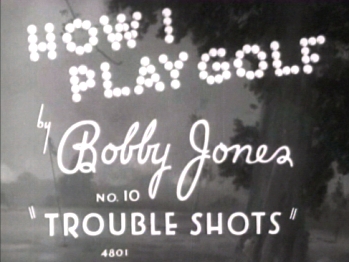
However, none exemplified the truest principles of sportsmanship better than Robert Tyre “Bobby” Jones, Jr.
During the 1925 U.S. Open, Jones’s ball ended up in the rough just off the fairway. Readying his shot, his iron accidentally caused a tiny movement in his ball. Angry with himself, he immediately turned to the marshals and called a penalty on himself. The marshals questioned the caddy and those in the gallery as to whether they had seen Jones’s ball move. No one else had witnessed the movement, so the decision was left to Jones. Bobby Jones called a two-stroke penalty on himself and lost the Open that year to Willie Macfarlane by a single stroke.
Flash forward to Gordon Youngs, who has more than twenty-five years experience in employee relations and personnel management and currently serves as personnel director for the city of Brea, California.
Gordon shared a story of sportsmanship that took place when he was a teenager.
“I was just gaining some skills at golf, and most enjoyed the days when friends and I just played for the love of the game. My father would drop us off at the course, and we would fashion a competition with each other, betting a nickel or dime a hole, just to make the game more fun. One day, my friends and I came to the seventh hole, a long par four which required a long second shot over a ravine.
“My friend Roger and I were about equal in ability. The other two guys, Bob and Don, were a little better and a little worse, respectively. Roger drove the ball well off the tee, toward some small trees on the right. I hit an ‘okay’ drive to the left. Bob banged his drive deep down the middle, and Don sliced one just in play to the right, twenty yards or so behind Roger.
“Don reached his ball first and got ready to hit. Roger moved down the fairway to his ball, and stepped back to the left to clear a path for Don. I watched from the left side of the fairway as Don tried to hit a hard three-wood to the green, and then as the ball ricocheted off a small tree and hit Roger hard in his ribcage.
“Roger went down clutching his side and grimacing in pain. He was in tears when I got there, but trying to joke about it. ‘Just help me up,’ he told us. As he came to his feet, he looked at Don, who was obviously worried and apologized repeatedly.
“‘Did you try to bank one off me deliberately?’ Roger said. He laughed, and Don looked relieved. When Roger went to his ball and prepared to hit, his swing was not as fluid as earlier that day. His follow-through was abrupt and his shot tumbled down the ravine. The pain was clearly affecting him, but he kept going, ending up taking a double-bogey on the hole.
“When I finished my bogey, Roger came over and handed me a nickel. ‘What’s this?’ I asked.
“‘Your winnings,’ he said with a forced smile.
“‘I can’t take this; you were injured. The bet is off,’ I insisted.
“‘No,’ he said, ‘that was just rub of the green and you won the hole. I would have collected if you missed a putt or hit one out of bounds. That’s just the way the game is played.’
“No matter how much he hurt, he played by the rules. While I was intent on being courteous, as we are all taught to be, he was telling me it was consistent with the courtesy of the game to accept wins and losses gracefully, to acknowledge an opponent’s good luck and disregard your own bad fortune.
“But, you say, it was only a nickel wager. No, it was more than that. It was setting the stage for the times when he and I had more on the line, when we would expect; even depend on each other, to do the right thing. I knew then what it meant to be loyal to my commitments, even if I had a good excuse for begging out. It was a moment of character, and I was the recipient of much more than a nickel’s worth of insight.”
“Golf is the closest game to the game we call life,” Bobby Jones once said. “You get bad breaks from good shots; you get good breaks from bad shots – but you have to play the ball as it lies.”
Comments

Recent Commentaries
Hearts and Minds
July 16, 2026

The Ethics of Belonging
July 14, 2026

The Best of Us
July 9, 2026
The Standard Washington Set
July 6, 2026

Who We Were. Who We Are…
July 4, 2026
Are We Still Worthy of What They Declared?
July 3, 2026
Are We Still Worthy of What They Declared?
July 1, 2026
Are We Still Worthy of What They Declared?
June 29, 2026
A Cautionary Tale: France Then, Washington Now
June 25, 2026
Different Issues. Same Fear.
June 22, 2026
Read More Articles
The Latest... And Sometimes Greatest
When Democracy Comes Dressed as Patriotism
The current American political order is starting to feel like a collision between the films Seven Days in May and All the King’s Men. One...
June 18, 2026
Who Watches the Algorithm?
We are building machines that may soon judge, persuade, police, diagnose, hire, fire, and even help governments decide whom to trust. Yet we still have...
June 15, 2026
He Just Does His Job
I’ve been listening to and watching Democratic Senator Jon Ossoff of Georgia for more than a year now: his speeches, his questions in Senate hearings,...
June 11, 2026
Why Donald Trump Has Pulled Me Back In—Again
Last August, I wrote that I was “stepping back from the chaos” of Donald Trump. I meant to write about his presidency only when his...
June 8, 2026
Scott Pelley Responds
During a contentious staff meeting at 60 Minutes, Scott Pelley spoke out sharply, criticizing the judgment and decision-making of CBS News editor in chief Bari...
June 4, 2026
The Clock is Still Ticking. But Now It’s Ticking for CBS
I began watching 60 Minutes when it premiered on September 24, 1968, when Harry Reasoner and Mike Wallace introduced a new kind of television journalism:...
June 3, 2026