Published: November 15, 2010
By Jim Lichtman
In the sports film, Blue Chips Pete Bell is a college basketball coach with an abiding integrity for the game he loves and a passion for his student players to succeed in life. But he’s got one problem – losing. For Coach Bell, losing is a four-letter word that he cannot, will not tolerate. Coming off a losing season, he hits the road to interview some “blue chip” prospects with the talent to give Pete the fix he’s looking for.

After a successful meeting with one, talented, young player, Pete talks with the boy’s key advisor, his mother who makes it very clear what it will take to get her son onto Pete’s college team: money.
Pete looks her straight in the eye and asks, “Do you really want your son to start out life by learning how to bend or break the rules? I mean, what’s he going to become?”
“A millionaire?” she answers.
Sadly, this scene or many very much like it get played out every year in college sports. The latest money scandal involves “Cam” Newton, quarterback for the Auburn Tigers whose star stats have merited serious attention by the sports world as well as the Heisman Trophy Trust. Unfortunately, what has also caught the attention of the sports world is the allegation that Newton shopped his talent to various colleges looking for a signing bonus of about $180,000.
New York Times reporter George Vecsey picks up the story from there.
“…Newton… was also in trouble involving academic cheating and a stolen computer just before he beat a retreat from a previous enrollment at Florida.
“This is the usual sordid stuff at the top level of college football, but what makes it more relevant is that Newton is the front-runner for this year’s Heisman Trophy. This comes only months after Reggie Bush was forced to give back his Heisman from 2005 when he played for – was sort of employed by – the University of Southern California.
“In Bush’s case, he was pressured to give back the trophy after the discovery he had taken money for himself and his family while leading U.S.C. in its glory years under Coach Pete Carroll.”
As a result, U.S.C. faced a two-year bowl ban as well forfeiture of victories, Vecsey points out. “But the university did not have to give back the millions it had made from capitalizing on Bush’s skill, to say nothing of his name and likeness on expensive souvenirs.
“In Bush’s case, the Heisman had already been awarded. In Newton’s case, voters must gauge the reports and the denials. Why give the Heisman,” Vecsey argues, “to a guy who may have been asking for down payments starting in high school?”
According to the Heisman Trust’s mission statement, “The Heisman Memorial Trophy annually recognizes the outstanding college football player whose performance best exhibits the pursuit of excellence with integrity. Winners epitomize great ability combined with diligence, perseverance, and hard work.”
“College football needs to be fixed,” Vecsey concludes, “or else Heisman voters will continue to fret that their latest selection could get busted for one thing or another down the road.”
The way it needs to be fixed begins with the basic understanding, by colleges and universities, that ethics is notabout what we say or what we intend. It’s about what we do; and in everything we do, ethics need to be treated as ground-rules of behavior, not just another set of criteria to consider.
Sadly, that’s easier said than done whenever big money and prestige are involved in everything from college sports to Wall Street.
No one doubts that pressure on teachers, students, coaches as well as administrators is greater than ever. However, teachers, coaches and administrators need to work to not only increase their own awareness of the ethical dimension of choices but inspire their students to make the right choices.
At the end of Blue Chips, Coach Bell stands before his players and the press after his big victory on the court and big loss of integrity in his soul. “Boys,” Bell confesses, “the rules don’t make much sense. But I believe in the rules. Some of us broke them. I broke them. I can’t do this. I can’t win like this.”
The “pursuit of excellence with integrity” is hard. If it were easy, everybody would be doing it. But if we’re ever going to have a hope of living up to those words we have to be willing to let go of a win-at-any-cost attitude. Anything less and we all lose.
Comments


Recent Commentaries

Has America Lost Its Way?
October 16, 2026
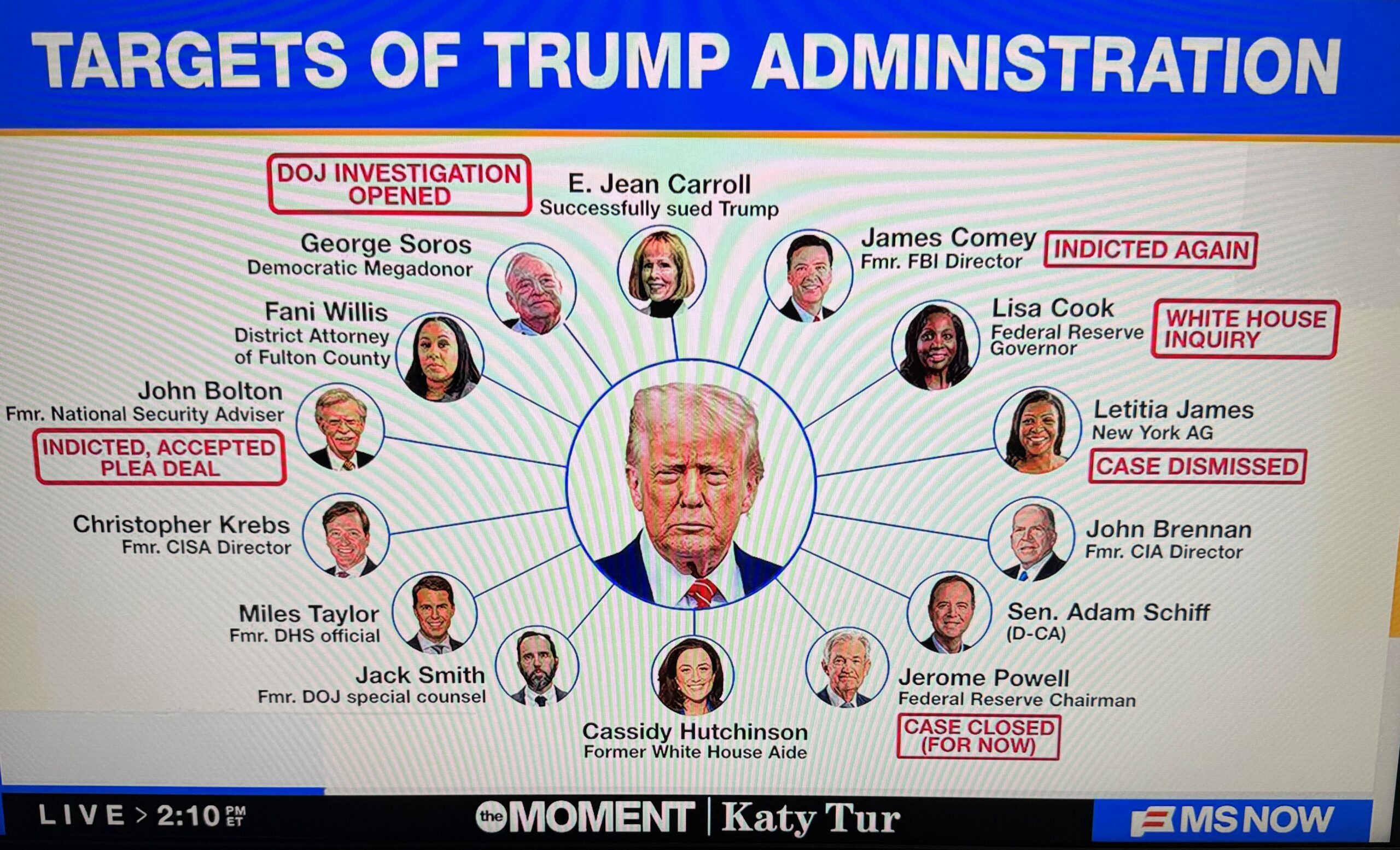
All The President’s Targets
October 13, 2026
Integrity Doesn’t Require a Megaphone
October 12, 2026

WHOSE PURPOSE DOES THIS SERVE?
October 9, 2026

Choreographer of Disaster
October 5, 2026
I Am Not a Politician, and I Have No Partisan Loyalties
October 2, 2026

A Man of Incorruptible Integrity
September 29, 2026

HUMAN VALUES: NOT SPECIFIED
September 23, 2026
You Can’t Do That.
September 21, 2026

I AM SICKENED
September 18, 2026
Read More Articles
The Latest... And Sometimes Greatest
The Courage to Defend a Principle
In 1998, at the height of the Clinton-Lewinsky scandal, Secret Service Director Lewis Merletti was driving to work when a radio report stopped him cold....
September 17, 2026
The Better Angels Among Us
By all appearances, we are becoming less the land of the brave than the land of resentment. Every day is Groundhog Day: same arguments, same...
September 14, 2026
We Remember
On September 11, 2001, nearly 3,000 people were killed in terrorist attacks in New York, at the Pentagon, and aboard Flight 93 in Pennsylvania. More...
September 11, 2026
Mister Roberts!
One of my favorite movies is Mister Roberts, the 1955 comedy-drama set aboard the USS Reluctant in the Pacific during World War II. Henry Fonda...
September 8, 2026
Where’s the Character
In 1984, Wendy’s ran a television commercial featuring the redoubtable Clara Peller, staring at an enormous hamburger bun. Inside was a burger patty smaller than...
August 7, 2026
It Was Important Then. It is Important Today
Freedom of speech in America is under attack, not only when people are denied the right to speak, but when lies, intimidation and the deliberate...
August 3, 2026