Published: January 18, 2026
By Jim Lichtman
DHS.gov
First an update:
Not long ago, 60 Minutes, the CBS news program, pulled a segment a few hours before it was set to air.
The report, by veteran correspondent Sharyn Alfonsi, examined conditions inside CECOT—the massive maximum-security prison in El Salvador. The story was vetted by executives and attorneys. And then, without public explanation, it was removed from the broadcast lineup at the last minute.
Tonight, the story finally aired.
As Alfonsi reports, CECOT has become a symbol of El Salvador’s hard-line approach to crime and detention. Opened under President Nayib Bukele, the facility has been promoted as a model of control and order: tens of thousands of inmates held under extreme conditions, and virtually no outside oversight.
The segment follows two Venezuelan men swept into that system. Their accounts describe prolonged isolation, harsh discipline, and a complete absence of due process. Whether one views CECOT as a necessary response to chaos or an example of state overreach, the story raises unavoidable questions: Who decides when punishment becomes cruelty? And what protections remain when governments act first and justify later?
CBS did not offer a detailed public explanation for the delay. Network officials said only that the broadcast schedule changed. Still, the decision to pull, and then later air, the piece reflects the tension surrounding stories that sit at the intersection of politics, immigration, incarceration, and human rights.
By airing the segment tonight, 60 Minutes returned to familiar ground—placing facts before the audience. Alfonsi’s reporting does not argue. It documents. It allows the voices of those inside the system to be heard, and it trusts viewers to draw their own conclusions without fear or favor. That is journalism’s essential role.
Now, today’s commentary—
A recent story in The Santa Barbara Independent stopped me cold.
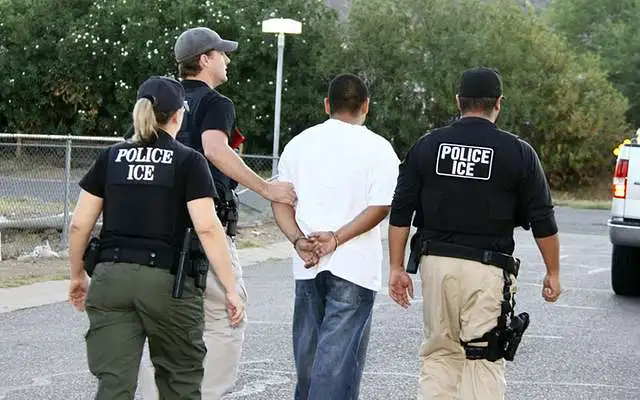
Like many people, I had been watching reports of ICE agents operating across the country and the protests that followed. What I hadn’t grasped was that Santa Barbara was not immune to these sudden, snatch-off-the-street encounters.
Santa Barbara resident Jupiter Lara Castillo did not wake up on September 16, 2025 expecting history to intrude on his life.
He put on his scrubs, climbed into the car he had recently bought, and headed out to take care of a routine errand before work. By midday, he was handcuffed, shackled at the ankles, and pushed into the back of an unmarked vehicle. He would not return home that night. Or the next. Or at all.
Castillo came to the United States at age seven. He grew up in California, went to public schools, played soccer, graduated from UC Santa Barbara, and built a life given to work and service. He held two demanding jobs: caring for elderly clients during the day and working nights at a shelter serving people without homes. He paid taxes. He renewed his DACA status on time, every time. He had no criminal record worth mentioning.
For nearly twenty years, the country treated him as what he was: a member of the community.
Still, he carried a quiet fear. He had seen the videos. Masked agents. Unmarked cars. People taken quickly, without warning. He told himself the rules still mattered, that following them still counted. He believed that living responsibly offered protection. It didn’t.
That morning, Castillo stopped briefly at the Department of Social Services in Goleta to submit work-related paperwork. When he returned to his car, four men surrounded him. They wore masks and bulletproof vests. They did not clearly identify themselves. When Castillo asked if they had a warrant, he was told he was not free to leave. His documents were dismissed. His explanations ignored. Within minutes, his wrists and ankles were bound.
Castillo was moved quickly: first to a local holding facility, then to a basement detention center in downtown Los Angeles, known among detainees as “the fridge.” The cold was relentless. The benches were concrete.
That night, he was driven at high speed through the desert to the Adelanto Detention Center, a privately operated facility where thousands are held. Most, like Castillo, had no criminal convictions. Most wore blue jumpsuits, the color reserved for “low risk.” Inside, privacy vanished. Restrooms had no doors. Showers were separated by thin curtains. The noise never stopped.
Castillo spent his days talking with the men around him: farmworkers, construction workers, service workers. None fit the portrait so often invoked to justify their detention. They were not criminals. They were workers. Parents. People with lives interrupted.
His family hired an attorney. Castillo hoped his active DACA status would allow him to fight his case from home. Instead, he learned that the government could hold him until his status expired, and deport him then. His choice was narrow and cruel. Remain detained for months, spending money his family did not have, or agree to self-deport and be barred from returning for years.
After weeks of uncertainty, Castillo chose to leave. Not because he believed it was right, but because it was survivable.
On October 9, he appeared before a judge via Zoom. He could not see the judge’s face. He could only hear a voice acknowledge that he seemed to be a good person, and explain that policy allowed no exceptions.
The next day, he was driven to the border.
Today, Castillo lives near Mexico City, in a country that is technically his birthplace but not his home. He speaks the language, but the life he built: the work, the relationships, the sense of belonging to our community, remains behind him.
This is not simply an immigration story. It is a test of character.
It is comforting to believe that stories like CECOT belong somewhere else. Jupiter Lara Castillo’s story reminds us they do not. The methods may differ, but the moral failure, the ease with which people are reduced to problems to be managed, looks uncomfortably familiar.
Castillo’s story asks a simple question: not whether the rules were followed, but whether we still recognize the human beings standing in front of us when they are enforced.
Jupiter Castillo remains in Mexico. A GoFundMe account was created to cover the legal expenses of his detention. Castillo remains hopeful that California is not closed to him forever.
Comments

Recent Commentaries
The Story of Chips, and The Cost of Looking Away
February 23, 2026
It’s Time to Talk About Respect
February 18, 2026
Adversity and Perseverance
February 16, 2026
Who Decides What’s Seen?
February 12, 2026
The Death of Shame
February 9, 2026

Because We Need It
February 5, 2026
Why George Marshall Still Matters
February 2, 2026

The Most Sacred Thing
January 29, 2026
THIS Cannot Be Ignored
January 25, 2026

Year One
January 20, 2026
Read More Articles
The Latest... And Sometimes Greatest
Removed
First an update: Not long ago, 60 Minutes, the CBS news program, pulled a segment a few hours before it was set to air. The...
January 18, 2026
Clarence Darrow’s Warning to a Tired Democracy
I first read Clarence Darrow for an American Jurisprudence class in college and have returned to his work several times since. He is widely regarded...
January 15, 2026
Accountability, Optional
On October 7, 2025, Pam Bondi, the nation’s chief law enforcement officer, appeared before a Senate oversight committee and refused to answer question after question,...
January 12, 2026
My Dinner with Jefferson, Hamilton and Madison
In June 1790, I attended an extraordinary dinner. Through a tear in the fabric of time, I found myself seated at a small table with...
January 8, 2026
When the Story Becomes the Scandal
For nearly sixty years, the CBS News program 60 Minutes has stood as one of the few remaining institutions in American journalism recognized as serious,...
January 5, 2026
A Light from Christmas Past – Conclusion
I’ll be back on January 5th. Later that night, Emily returned home, warmed her hands around a cup of tea, and set the original lantern...
December 24, 2025