Published: July 27, 2009
By Jim Lichtman
I was in the midst of writing a piece on President Obama’s initial remarks made last Wednesday concerning the arrest of Harvard Professor Henry Louis Gates by Cambridge Police Sgt. James Crowley when news came Friday of Mr. Obama making a new statement to “recalibrate” his language.
More accurately, he was recalibrating his judgment.
When I first heard the news that Mr. Gates had been arrested in his own home after showing police officers a photo ID along with his address after a passerby called to report a possible break-in, my first reaction was, “How can the police – individuals whom we are supposed to trust – be so stupid as to engage in this kind of behavior?”
But I wasn’t there. I didn’t know all the facts.
Apparently, neither did the president. “Now, I don’t know, not having been there and not seeing all the facts,” the president said, “but I think it’s fair to say… that the Cambridge police acted stupidly…”
I’m sorry Mr. President, but those two statements don’t go together. It’s not fair to say that you lack the facts of the case and then say that “it’s fair to” pass judgment on the police officers at the scene.
“Sergeant Crowley,” the New York Times reported, “said that he arrested Professor Gates because the professor got angry after being asked for identification and proof of his address, and continued his ‘tirade after being warned multiple times.’ The sergeant said that the professor had berated him, and was adamant that he was following police procedures in making the arrest.”
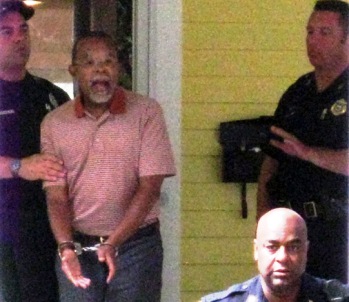
In all the claims and counter-claims, one thing that stood out to me was the photo above. In the lower right hand corner we see a black police officer at the scene. What was his account of the incident?
Sgt. Leon Lashley (pictured), told the Associated Press that he supports Sgt. Crowley’s actions “100 percent.”
Recognizing that he jumped the gun Wednesday in his rhetoric regarding Sgt. Crowley and the Cambridge Police, President Obama called the police officer before making his statement. “I continue to believe,” Mr. Obama said Friday, “based on what I have heard, that there was an overreaction in pulling Professor Gates out of his home to the station. I also continue to believe, based on what I heard, that Professor Gates probably overreacted as well.
“My hope is,” Mr. Obama concluded, “is that as a consequence of this event this ends up being what’s called a ‘teachable moment,’ where all of us, instead of pumping up the volume, spend a little more time listening to each other and try to focus on how we can generally improve relations between police officers and minority communities, and that instead of flinging accusations we can all be a little more reflective in terms of what we can do to contribute to more unity.”
Mr. Obama did teach us a couple of things last week. First, by his own example, he reminded us of the danger in rushing to judgment based on incomplete information. Second, he pointed out that incidents like Gates give us an opportunity to revisit the issue of race and tolerance in this country because we don’t talk about often or seriously enough.
More importantly, he reminded us that, in spite of having just elected the first black president, all of us have a lot more work to do concerning the intolerance that still exists in this country. And it needs to begin again with a lot more dialog. In fact, the president acknowledged that it was Sgt. Crowley who suggested a White House meeting between the president, Professor Gates and himself to discuss the issue over a beer.
My friend and trainer, Steve Gordon, also happens to be black. When I asked him what he would like to see come out of that White House meeting he said, “For both men, to look one another in the eye and admit that both sides could have handled things differently. Then shake hands and move on.”
That’s something we can all learn from.
Comments
Recent Commentaries
Has America Lost Its Way?
October 16, 2026
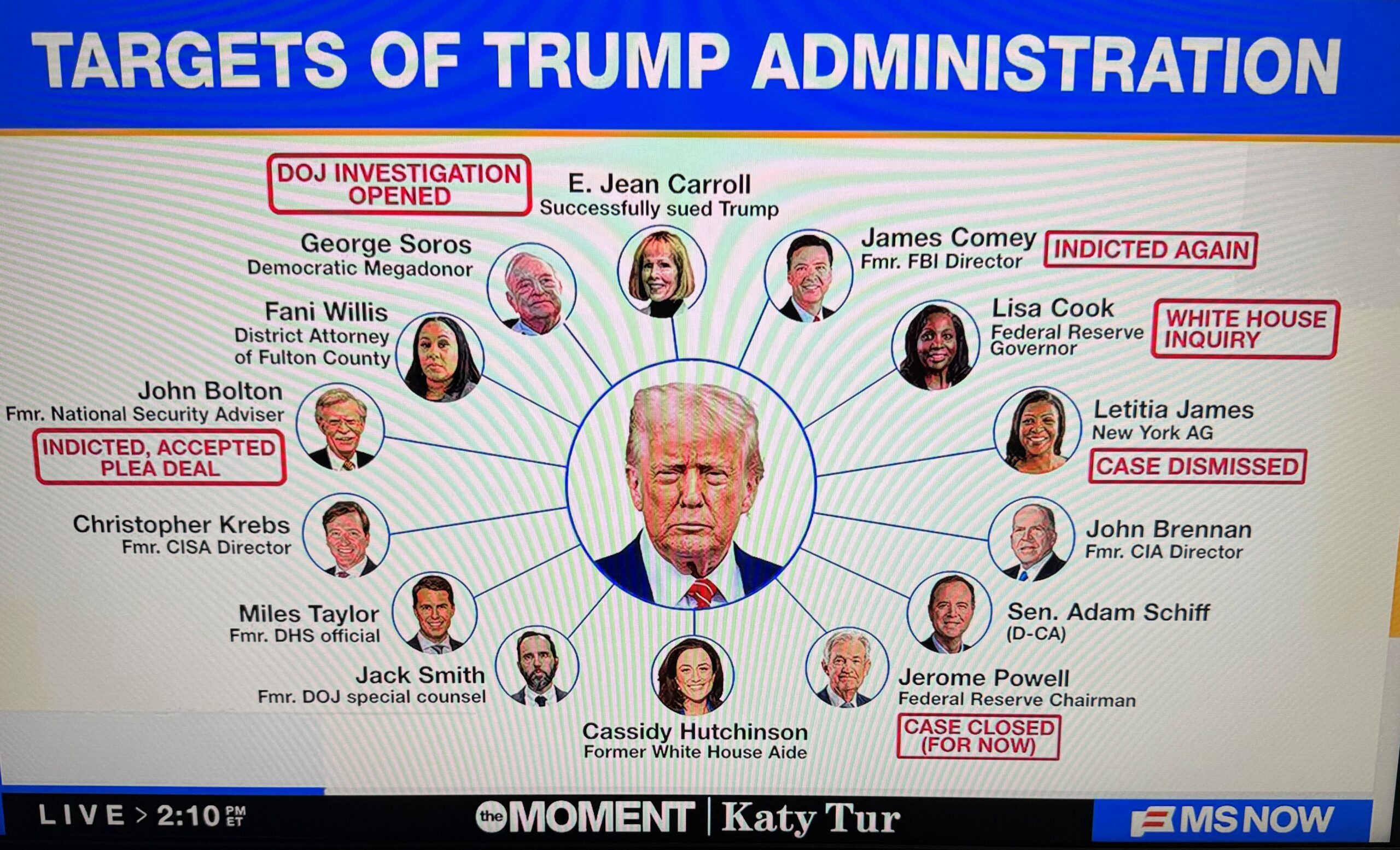
All The President’s Targets
October 13, 2026
Integrity Doesn’t Require a Megaphone
October 12, 2026
WHOSE PURPOSE DOES THIS SERVE?
October 9, 2026
Choreographer of Disaster
October 5, 2026
I Am Not a Politician, and I Have No Partisan Loyalties
October 2, 2026
A Man of Incorruptible Integrity
September 29, 2026

HUMAN VALUES: NOT SPECIFIED
September 23, 2026
You Can’t Do That.
September 21, 2026
I AM SICKENED
September 18, 2026
Read More Articles
The Latest... And Sometimes Greatest
The Courage to Defend a Principle
In 1998, at the height of the Clinton-Lewinsky scandal, Secret Service Director Lewis Merletti was driving to work when a radio report stopped him cold....
September 17, 2026
The Better Angels Among Us
By all appearances, we are becoming less the land of the brave than the land of resentment. Every day is Groundhog Day: same arguments, same...
September 14, 2026
We Remember
On September 11, 2001, nearly 3,000 people were killed in terrorist attacks in New York, at the Pentagon, and aboard Flight 93 in Pennsylvania. More...
September 11, 2026
Mister Roberts!
One of my favorite movies is Mister Roberts, the 1955 comedy-drama set aboard the USS Reluctant in the Pacific during World War II. Henry Fonda...
September 8, 2026
Where’s the Character
In 1984, Wendy’s ran a television commercial featuring the redoubtable Clara Peller, staring at an enormous hamburger bun. Inside was a burger patty smaller than...
August 7, 2026
It Was Important Then. It is Important Today
Freedom of speech in America is under attack, not only when people are denied the right to speak, but when lies, intimidation and the deliberate...
August 3, 2026