Published: November 21, 2011
By Jim Lichtman
England’s finest Prime Minister and Statesman Winston Churchill famously said, “A fanatic is one who can’t change his mind and won’t change the subject.”
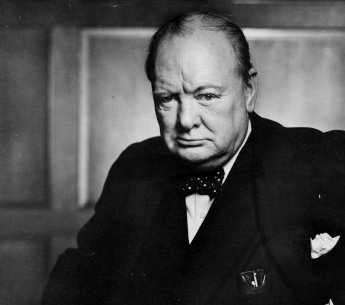
Considering the ticking clock deadline for Congress’s bipartisan supercommittee to find a path to cut at minimum $1.2 trillion from the budget over ten years, Churchill’s words seem sadly prophetic.
“It wasn’t so much of a failure as it was a failure to seize an opportunity,” said the panel’s GOP co-chair Rep. Jeb Hensarling on Fox News Sunday.
Democratic co-chair, Sen. Patty Murray sounded more optimistic speaking to CNN’s Candy Crowley, “I believe strongly that we still have the capability to come together to solve this problem,” Murray said. Then added, “If the supercommittee can’t do it, then I hope that Congress will. In fact, I’m committed to solving this. You can’t just ignore this crisis.”
Churchill might remind the committee: “It is no use saying, ‘We are doing our best.’ You have got to succeed in doing what is necessary.”
Whatever happened to statesmanship? Can you name America’s last, great statesman?
President Obama has sounded statesman-like in many speeches, and yet, at the end of the day, he hasn’t been able to inspire or persuade a particular group of politicians enough to make the required shared sacrifices that all polls seem to indicate the people want. Last August, Gallup reported that “Six in 10 Americans say members of the new bipartisan ‘supercommittee’ mandated to find new ways of reducing the federal budget deficit should compromise, even if the agreement reached is one they personally disagree with. This includes a majority of Republicans, independents, and Democrats.”
Statesmanship is that quality of leadership that looks at the big picture. It’s an understanding – particularly in times of crisis – that we are all in this together and must all do what is necessary for the whole.
The politician works the levers and switches of power.
The statesman works to achieve a balance.
The politician works for the expediency of the moment.
The statesman works for the long term.
The politician is about the interests of politics.
The statesman is about the interests of all the people.
Churchill understood this insisting that we learn the lessons of history. Roman statesmen like Cicero and Cincinnatus knew this, as did American political giants Henry Clay, Daniel Webster and Abraham Lincoln.
“Lincoln was exercising the same prudent statesmanship,” conservative writer Dinesh D’Souza said, “when he wrote to New York newspaper publisher Horace Greeley asserting: ‘My paramount object in this struggle is to save the Union, and is not either to save or to destroy slavery. If I could save the Union without freeing any slave, I would do it; and if I could save it by freeing all the slaves, I would do it; and if I could do it by freeing some and leaving others alone, I would also do that.’
“The letter was written on August 22, 1862, almost a year and a half after the Civil War broke out, when the South was gaining momentum and the outcome was far from certain…. Lincoln was convinced, and rightly so, that the cause of the Union was gravely imperiled.”
“Government is a trust, Clay wrote, “and the officers of the government are trustees. And both the trust and the trustees are created for the benefit of the people.”
According to Gallup, 87% of the country clearly does not trust the trustees. “Congressional job approval remains at 13% in November (14) …identical to October and tying the all-time Gallup low on this measure. The 2011 average is on track to be the lowest annual rating of Congress in Gallup’s history.”
Former politicians Erskine Bowles, Democrat, and Republican Alan Simpson, wrote in an Op-Ed at the end of September, “The stakes for this committee are very high. If the panel is unable to reach agreement on a credible deficit-reduction plan, and the across-the-board cuts agreed to in the August debt-ceiling deal are allowed to take effect, the consequences to our economy and our political system would be serious, if not devastating. Such an outcome would produce not only bad policy, by cutting spending indiscriminately without setting priorities, but would further undermine public and market confidence in the political system’s ability to resolve problems.”
Republican Sen. Jon Kyl blamed his colleagues, “Our Democratic friends were never able to do the entitlement reforms…They weren’t going to do anything without raising taxes.”
“We’re here all day. We are ready to do 1.2 trillion,” said Democrat and committee member John Kerry. “We’re ready to do it, if they will give up their insistence on the Bush tax cuts.”
“Good words do not last long unless they amount to something,” Native American Chief Joseph once said. “I am tired of talk that comes to nothing. It makes my heart sick when I remember all the good words and all the broken promises. There has been too much talking by men who had no right to talk.”
I’m tired of hearing candidates talk up their business resumes. We don’t need CEOs. We need statesmen.
Comments
Recent Commentaries
Because We Need It
February 5, 2026
Why George Marshall Still Matters
February 2, 2026
The Most Sacred Thing
January 29, 2026
THIS Cannot Be Ignored
January 25, 2026
Year One
January 20, 2026

Removed
January 18, 2026
Clarence Darrow’s Warning to a Tired Democracy
January 15, 2026
Accountability, Optional
January 12, 2026
My Dinner with Jefferson, Hamilton and Madison
January 8, 2026

When the Story Becomes the Scandal
January 5, 2026
Read More Articles
The Latest... And Sometimes Greatest
A Light from Christmas Past – Conclusion
I’ll be back on January 5th. Later that night, Emily returned home, warmed her hands around a cup of tea, and set the original lantern...
December 24, 2025
A Light From Christmas Past – Part II
Emily returned to the attic the next evening. The attic felt different, not mysterious, purposeful. She unlocked the small door again and stood for a...
December 23, 2025
A Light from Christmas Past
In the winter of his century, Charles Dickens walked a London powered by industry but running short on warmth. People moved past one another as...
December 22, 2025
Nothing Beside Remains
I have stopped watching national news about Donald Trump because the coverage now mirrors the damage itself. What once informed now exhausts; what once clarified...
December 16, 2025
Finding Common Ground, and Why It Matters
A national media organization has recognized the seriousness of our political division and offered something we’ve been missing… A REAL beginning toward ending the death...
December 15, 2025
What Dickens Meant Us to Remember
Every December, I look forward to reading and watching Dickens’ A Christmas Carol. While there are countless versions of the classic, I always return to...
December 11, 2025