Published: May 13, 2019
By Jim Lichtman
On October 29, 2018, Lion Air Flight 610 took off from Jakarta, Indonesia in a brand-new Boeing 737 Max 8.

Photo: John Gress / AP
Within moments, without a cloud in the sky, the plane “repeatedly bucked downward,” The New York Times reported (Mar. 20). Lion Air 610 crashed into the Java Sea, losing all on board.
According to The Times report, the plane “should have never left the runway. On its previous flight, the aircraft gave incorrect speed and altitude readings.”
March 10, 2019, Ethiopian Airlines Flight 302, another 737 Max 8, took off from Addis Ababa, Ethiopia, “…in good weather, but its vertical speed became unstable right after takeoff,” The Times reported (Mar. 10).
While investigations into both incidents continue, data from the on-board black boxes strongly suggests that an automated system developed to help the plane avoid stalling may be to blame. The data also suggests that design changes in the Max 8 may have also played a part.
“The Max has larger engines,” The Times said in an updated story (Apr. 30), “which alter the plane’s aerodynamics and make it more likely to stall in some flight conditions. Boeing developed an automatic system, known as MCAS, that pushes the plane’s nose down in some circumstances in order to stabilize the aircraft. …
“MCAS was originally controlled by one of two so-called angle of attack sensors,” The Times continues, “which are mounted on the plane’s exterior to monitor its position in the sky. That information has been used by the flight control computer to determine the risk of a stall.
“…weeks after the Ethiopia crash, the company said an alert, which was supposed to inform pilots when the two sensors on the plane disagreed, was not functioning as intended. The alert, intended to be ‘stand-alone,’ worked only if airlines had bought an optional feature that showed readings from those sensors on displays in the cockpit.”
With similar conditions involved in the crash of the second 737 Max 8, the Trump administration ordered all 737 Max 8s grounded.
However, Boeing CEO, Dennis Muilenburg, insisted the planes were safe and essentially blamed the tragedies on the pilots.
“Muilenburg said the pilots did not ‘completely’ follow the procedures that Boeing had outlined,” CNN Business wrote (Apr. 30).
“ ‘When we design these systems, understand that these airplanes are flown in the hands of pilots,’ he said. He added that Boeing was unable to find any ‘technical slip or gap’ in building its MCAS software.
“Ethiopian officials said… that pilots flying Ethiopian Airlines Flight 302 repeatedly performed all of Boeing’s procedures, but could not control the plane before it crashed.”
But here’s the real crisis for Boeing, credibility: They knew about the issues with the plane one year before the crash of Lion Air and did nothing about them.
“In 2017,” CNN reports (May 7), “after 737 MAX deliveries began, Boeing engineers ‘identified’ that the 737 Max display system software did not correctly meet the AOA Disagree alert requirements, the statement reads.
“Yet, after a review, Boeing’s engineers decided not to immediately correct the problem, concluding that ‘the existing functionality was acceptable until the alert and the indicator could be delinked in the next planned display system software update.’ ”
But that’s certainly not how Muilenburg described the problem.
“ ‘If they really wanted to fix the problem, you would think they would admit that it’s their fault,’ said Paul Hudson, the president of Flyers Rights, a nonprofit group advocating for passengers. ‘You can’t say, “Oh, we own it, but we didn’t do anything wrong and it’s someone else’s fault.” ” The Times reported (May 9).
According to a meeting attendee, Boeing told United a different story.
“Boeing told United that the alert and the angle of attack indicator came as a package deal. United declined the options at the time.
“ ‘Every day it seems like a new set of questions pops up,’ said Dennis Tajer, a spokesman for the union representing American Airlines pilots.”
A March 20 commentary by Captain Chesley Sullenberger reveals a lot about the shortfalls of both Boeing and the FAA.
- Budgetary insufficiency: “Staffing has not been adequate for FAA employees to oversee much of the critically important work of validating and approving aircraft certification. Instead, much of the work has been outsourced by designating aircraft manufacturer employees to do the work on behalf of the FAA. This, of course, has created inherent conflicts of interest…”
- Corporate and political pressure: “…there is too cozy a relationship between the industry and the regulators. And in too many cases, FAA employees who rightly called for stricter compliance with safety standards and more rigorous design choices have been overruled by FAA management, often under corporate or political pressure.”
- Competitive pressure: “Boeing, in developing the 737 Max 8, obviously felt intense competitive pressure to get the new aircraft to market as quickly as possible. When flight testing revealed an issue with meeting the certification standards, they developed a fix, Maneuvering Characteristics Augmentation System (MCAS), but did not tell airline pilots about it. In mitigating one risk, they seem to have created another, greater risk. …
“Boeing has focused on trying to protect its product and defend its stance,” Sullenberger summarizes, “but the best way, indeed the only way, to really protect one’s brand or product is to protect the people who use it. We must not forget that the basis of business, what makes business possible, is trust.”
Wednesday: How one CEO handled a crisis that led to more trust.
Comments
Leave a Comment
Recent Commentaries
November 4, 2026
October 20, 2026
Has America Lost Its Way?
October 16, 2026
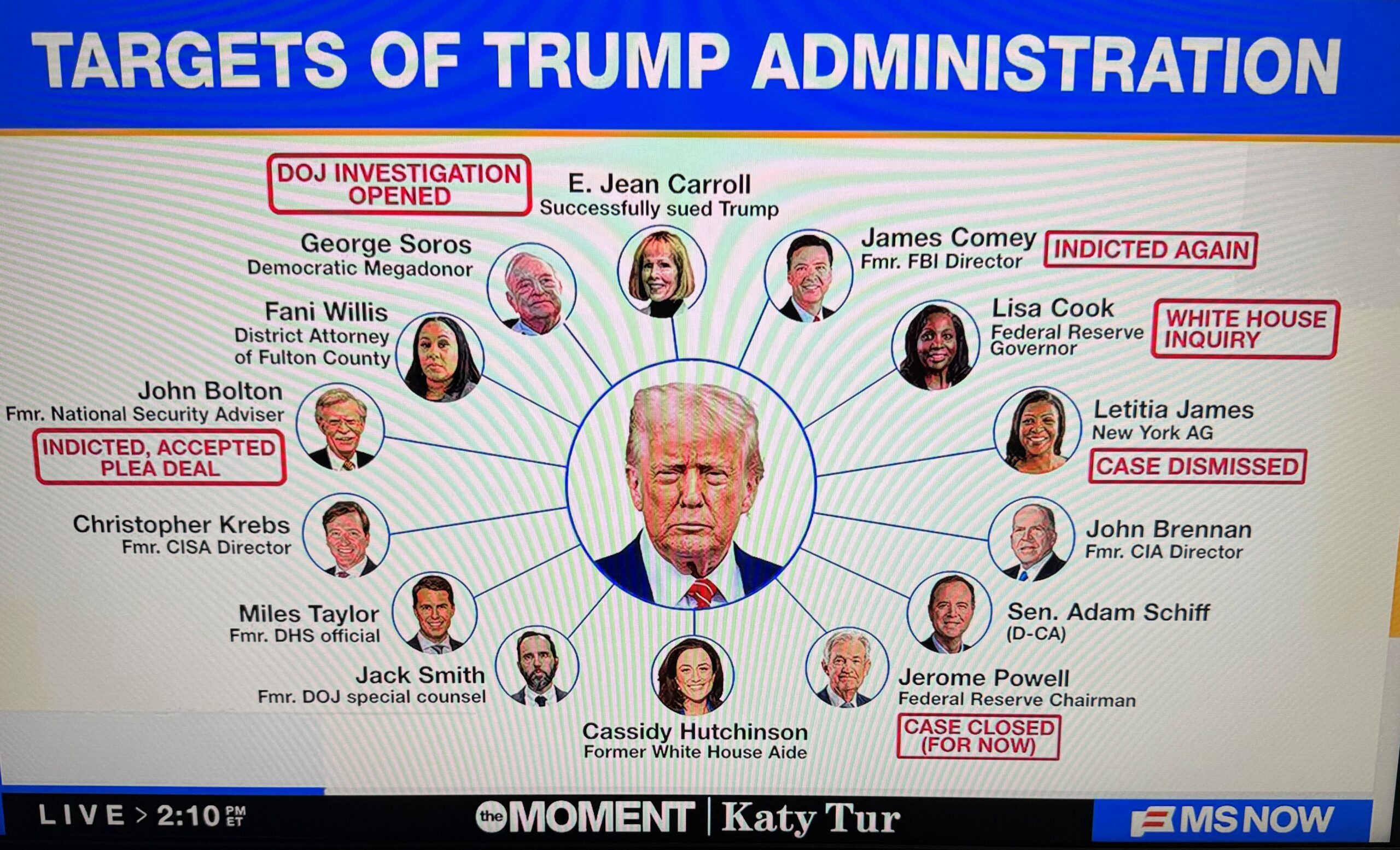
All The President’s Targets
October 13, 2026
Integrity Doesn’t Require a Megaphone
October 12, 2026
WHOSE PURPOSE DOES THIS SERVE?
October 9, 2026

Choreographer of Disaster
October 5, 2026
I Am Not a Politician, and I Have No Partisan Loyalties
October 2, 2026
A Man of Incorruptible Integrity
September 29, 2026

HUMAN VALUES: NOT SPECIFIED
September 23, 2026
You Can’t Do That.
September 21, 2026
Read More Articles
The Latest... And Sometimes Greatest
I AM SICKENED
Tonight, protesters are surrounding the Kennedy Center, the living memorial to John F. Kennedy and the heartbeat of Washington’s cultural life. They are there because...
September 18, 2026
The Courage to Defend a Principle
In 1998, at the height of the Clinton-Lewinsky scandal, Secret Service Director Lewis Merletti was driving to work when a radio report stopped him cold....
September 17, 2026
The Better Angels Among Us
By all appearances, we are becoming less the land of the brave than the land of resentment. Every day is Groundhog Day: same arguments, same...
September 14, 2026
We Remember
On September 11, 2001, nearly 3,000 people were killed in terrorist attacks in New York, at the Pentagon, and aboard Flight 93 in Pennsylvania. More...
September 11, 2026
Mister Roberts!
One of my favorite movies is Mister Roberts, the 1955 comedy-drama set aboard the USS Reluctant in the Pacific during World War II. Henry Fonda...
September 8, 2026
Where’s the Character
In 1984, Wendy’s ran a television commercial featuring the redoubtable Clara Peller, staring at an enormous hamburger bun. Inside was a burger patty smaller than...
August 7, 2026
Business Ethics is not an oxymoron, though to read Boeing’s CEO’s recent comments – in my opinion – sounds like an exercise in corporate double-speak.
In reading one newspaper account about the shareholders meeting, it was reported that for some investors it wasn’t so much about the tragic loss of life and safety issues – rather it was that share prices have declined and costs are rising. At this point I’m hoping that moral courage will help put Boeing on – what is in my opinion – the right side of Business Ethics.
–Steve