Published: February 27, 2019
By Jim Lichtman
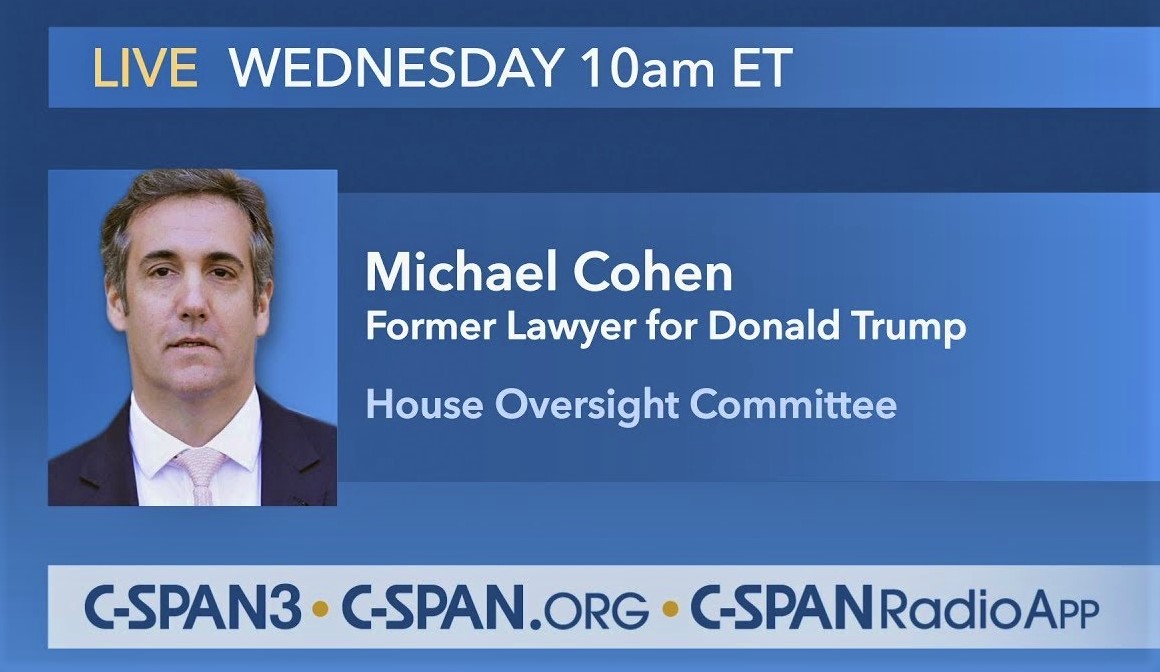
Michael Cohen, President Trump’s former lawyer and self-described “fixer,” will testify, publicly, before the House Committee on Oversight and Reform today.
Cohen – who is set to begin serving a prison term stemming from a variety of charges brought about by the special counsel investigation – will face some tough questions, but the very first question might likely be: “Why should we trust you now, when you lied to us in the past?”
“Lanny J. Davis, a lawyer and adviser to Mr. Cohen,” The New York Times reports (Feb.26), says “…that Mr. Cohen ‘worked very hard on this moment to not only tell the truth, but to back it up with documents.’ Mr. Davis said Mr. Cohen’s response to questions about his truthfulness will be ‘I take full responsibility, I lied in the past; now you have to decide if I’m telling the truth.’ ”
This brings up a larger question for all of us: Why do we lie?
And yes, I mean all of us: little things, big things, to friends, bosses, co-workers, family. Sometimes, we do it out of loyalty. Sometimes, to make ourselves look better in the eyes of others. Then there are the times we lie to intentionally mislead others about our actions or inactions.
“The ubiquity of lying,” Yudhijit Bhattacharjee writing for National Geographic Magazine (June 2017), says “was first documented systematically by Bella DePaulo, a social psychologist at the University of California, Santa Barbara.
“Two decades ago DePaulo and her colleagues asked 147 adults to jot down for a week every instance they tried to mislead someone. The researchers found that the subjects lied on average one or two times a day. Most of these untruths were innocuous, intended to hide one’s inadequacies or to protect the feelings of others. Some lies were excuses—one subject blamed the failure to take out the garbage on not knowing where it needed to go.
“Yet other lies—such as a claim of being a diplomat’s son—were aimed at presenting a false image. While these were minor transgressions, a later study by DePaulo and other colleagues involving a similar sample indicated that most people have, at some point, told one or more ‘serious lies’—hiding an affair from a spouse, for example, or making false claims on a college application.”
“People lie and tell the truth to achieve a goal, researcher Tim Levine points out. “We lie if honesty won’t work.”
Breaking down the research, Bhattacharjee describes the most common reasons:
22 percent lie to cover-up a mistake or transgression.
16 percent for financial benefits.
15 percent for benefits beyond money.
14 percent to escape or evade other people.
8 percent lie to shape a positive image of themselves.
7 percent do it for unclear motives, even to themselves.
5 percent: to make people laugh.
5 percent: to help others.
4 percent: to hurt others.
2 percent: to uphold social order and avoid rudeness.
2 percent are pathological. People who ignore or disregard reality.
The consequence of all this lying, however, is a steady erosion of our integrity. Ethicist Michael Josephson cautions us about The Four Enemies of Integrity:
Self-Interest: things we want (fame, wealth, esteem from others.)
Self-Protection: Things we don’t want (caught in a lie, violating a rule, conflict of interest.)
The last two are particularly calculating:
Self-Deception: Not an ethical issue (“Everybody does it; “It’s necessary”; “I was just doing it for you”; “I’m just fighting fire with fire”; “They owe it to me.”)
Self-Righteousness: The end justifies the means.
“In as much as people are willing to hold others to high ethical standards and apply strict tests about whether the behavior of others is proper,” Josephson tells us, “perhaps the biggest challenge is for people to hold themselves accountable to those same standards.”
While Michael Cohen will likely face an uphill battle in convincing committee members of what he now says is the truth, when it comes to integrity, former Senator Alan Simpson sums it up best:
“If you have integrity, nothing else matters. If you don’t have integrity, nothing else matters.”
Comments

Recent Commentaries
It Was Important Then. It is Important Today
August 3, 2026
When Political Identity Replaces Ethical Judgment
July 31, 2026

Principles Matter.
July 28, 2026

All the President’s Men 2.0
July 23, 2026
The Threat to November Is Already Here
July 20, 2026
Jon Ossoff and the Conscience of Atticus Finch
July 17, 2026

Hearts and Minds
July 16, 2026

The Ethics of Belonging
July 14, 2026

The Best of Us
July 9, 2026
The Standard Washington Set
July 6, 2026
Read More Articles
The Latest... And Sometimes Greatest
Who We Were. Who We Are…
Today, America is 250 years old. This Fourth of July, amid deep national division, it seems worth asking a simple question: Which of our country’s...
July 4, 2026
Are We Still Worthy of What They Declared?
Conclusion: The Words That Made Us and Still Must. In December of 1776, the Revolution was not moving toward triumph. It was close to collapse....
July 3, 2026
Are We Still Worthy of What They Declared?
Part 2: Common Sense Are we still capable of that kind of clarity when it matters most? There was a moment in the birth of...
July 1, 2026
Are We Still Worthy of What They Declared?
For the most part, my high school history classes consisted of names, dates, documents, and battles. What I’ve learned since then — through historians like...
June 29, 2026
A Cautionary Tale: France Then, Washington Now
Lately, I’ve been reading more history, mostly to educate myself. But the other night, I opened Lord Acton’s Lectures on the French Revolution and didn’t...
June 25, 2026
Different Issues. Same Fear.
As our nation nears its 250th anniversary, an uneasy emotional connection to the past has returned—one rooted in fear, and the question of who gets...
June 22, 2026