Published: February 13, 2017
By Jim Lichtman
From time to time I receive private e-mails from readers who wish to offer opinions without posting them directly to a story. Recently, I was asked why so many of my commentaries over the past year have veered from ethics into politics.
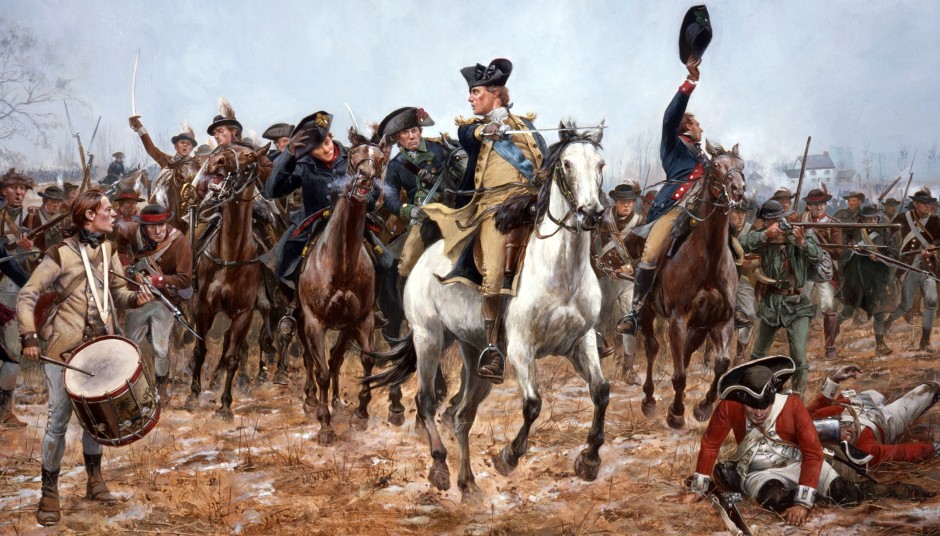
The simple reality is that politics and ethics are constantly intersecting. When it comes to issues of accountability and responsibility, politicians are perhaps the most visible expression of those ethical values. Individuals who hold public office not only represent us, they represent who we are and what we stand for as a country. Thus, we need to be able to trust that they are not only acting in a way that represents our best interests but our principles as well.
Nowhere are those principles more challenged and critical than on the battlefield. In a moving editorial from Sunday’s New York Times (Feb. 12), author and former Marine Phil Klay shares two stories that demonstrate our national character.
In one account, Klay describes how a U.S. Marine had died on the operating table after being shot by an enemy sniper. Not long after, that sniper was now on the same table undergoing the best medical care available. That enemy combatant survived, Klay points out, due to blood “donated from the ‘walking blood bank’ of nearby Marines.”
“These weren’t acts of exceptional moral courage,” Klay observes. “This was standard policy, part of tradition stretching back to the Revolutionary War, when George Washington ordered every soldier in the Continental Army to sign a copy of rules intended to limit harm to civilians and ensure that their conduct respected what he called ‘the rights of humanity,’ so that their restraint ‘justly secured to us the attachment of all good men.’
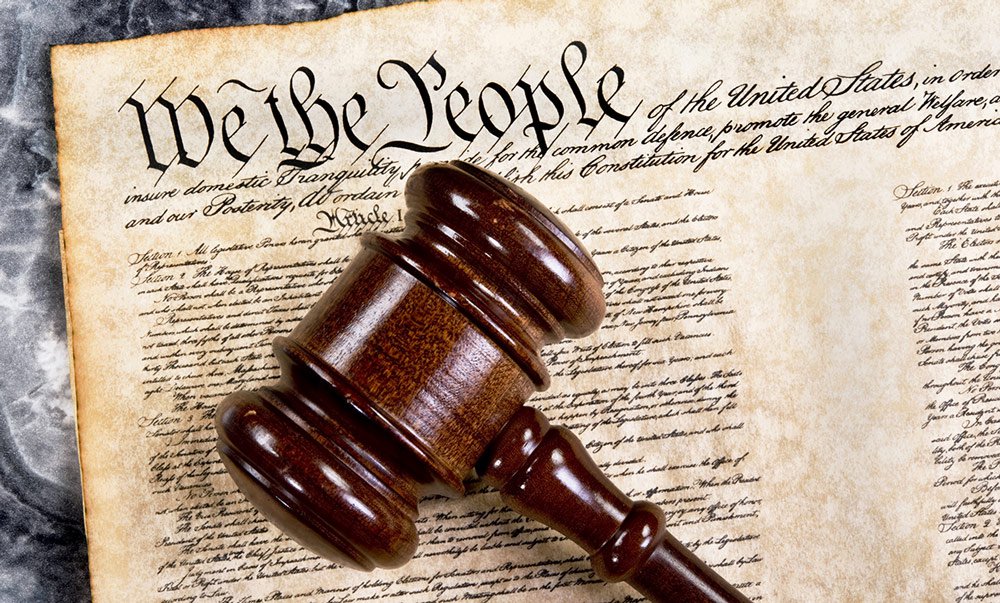
“From our founding we have made these kinds of moral demands of our soldiers. It starts with the oath they swear to support and defend the Constitution, an oath made not to a flag, or to a piece of ground, or to an ethnically distinct people, but to a set of principles established in our founding documents. An oath that demands a commitment to democracy, to liberty, to the rule of law and to the self-evident equality of all men. …
“That’s why those Marines were trained to care for their enemy. That’s why another Marine gave his own blood to an insurgent. Because America is an idea as much as a country, and so those acts defend America as surely as any act of violence, because they embody that idea.
“After I left the Marine Corps, I met a veteran named Eric Fair… [who had] gone to Abu Ghraib prison in January 2004…
“Back then Abu Ghraib was a mess, he told me. Thousands of Iraqis, some of them insurgents, plenty of them innocent civilians caught up in the post-invasion chaos, and far too few qualified interrogators to sort it out. And the information they were seeking — it was literally life or death.
“So Eric began crossing lines. Not legal lines — he followed the rules. But moral lines, personal lines, lines where it was clear that he wasn’t treating the people in his interrogation booth like human beings.
“One time, it was with a boy captured with car batteries and electronic devices. The boy said his father used the batteries for fishing, an explanation that Eric found absurd. So, he used the approved techniques. Light slaps, stress positions. The boy eventually broke and, weeping, told Eric about a shop where his father delivered the electronics.
“When a unit was sent to raid the shop, it found half a dozen partly assembled car bombs. ‘It was an enormous adrenaline rush,’ he told me. He’d used techniques he now considers torture and, he thought, saved lives.
“So, naturally, he kept using them. There were a large number of detainees caught with car batteries, all of them with the same story about fishing. With them, Eric would go right to the techniques designed to humiliate, to degrade, to make people suffer until they tell you what you want to hear. But Eric didn’t get any more results. No more car bomb factories. Just a lot of broken, weeping detainees.
“Eventually, he told a fellow contractor the ridiculous fishing story, and how he wasn’t falling for it, and the contractor told him: ‘Of course they fish with car batteries. I used to do it in Georgia.’ The electric charge stuns the fish, a simple method for an easy meal.
“Eric isn’t sure how many innocent Iraqis he hurt,” Klay continues. “All he knows is how easy it was for him to cross the line. Just as with that wounded insurgent there was a codified set of procedures set in place to help guide Marines and Navy medical personnel to make moral choices, choices they could tell their children and grandchildren about without shame, for Eric, there was a codified set of procedures beckoning him to take actions that he now feels condemn him. …
“WikiLeaks later released a United States assessment that detainee mistreatment at Abu Ghraib and Guantánamo was ‘the single most important motivating factor’ convincing foreign jihadists to wage war, and Gen. Stanley McChrystal said, ‘In my experience, we found that nearly every first-time jihadist claimed Abu Ghraib had first jolted him to action.’ Our moral reputation had started killing American soldiers. …
“Lawyers at the highest levels of government had been consulted, asked to bring us to the furthest edge of what the law might allow. To do what it takes, regardless of whether such actions will secure the ‘attachment of all good men,’ or live up to that oath we swear to support and defend the Constitution.
“What to make of that oath, anyway? The Constitution seems to mean different things at different times and places — whether in my unit’s dusty little combat hospital, or in Eric’s interrogation booth, or in a stadium where a crowd cheers a presidential candidate vowing to torture his nation’s enemies. We live in a democracy, so that document can be bent and twisted and re-formed to mean whatever we want it to.
“If we choose to believe in a morally diminished America, an America that pursues its narrow selfish interests and no more, we can take that course and see how far it gets us. But if we choose to believe that America is not just a set of borders, but a set of principles, we need to act accordingly. That is the only way we ensure that our founding document, and the principles embedded within, are alive enough, and honorable enough, to be worth fighting for.”
Comments

Recent Commentaries
The Man Who Feared What We Might Become
March 30, 2026
Same Price. Same War. Different Truth
March 25, 2026

Who Writes This Stuff: Jim or A.I.?
March 23, 2026
Loyalty vs. Conscience
March 19, 2026

When Will This Madness End!?
March 18, 2026

When Government Threatens the Truth
March 16, 2026
Separating Fact from Rhetoric
March 12, 2026

Lindsay Vonn’s Gold Medal Moment
March 12, 2026

Teaching an Algorithm Right from Wrong
March 9, 2026
Now, More Than Ever
March 6, 2026
Read More Articles
The Latest... And Sometimes Greatest
Peace Is Not an Elective
I had just learned of the passing of a good friend and colleague, Colman McCarthy when the memories began to return. Before I ever met...
March 2, 2026
Revelations
In 1927, Sinclair Lewis gave America a character it did not want to recognize in the mirror: Elmer Gantry. Gantry is loud, magnetic, insatiable —...
February 26, 2026
The Story of Chips, and The Cost of Looking Away
It’s just a photograph: a wartime dog sitting alert, ears up, wearing a military harness. But the story about a World War II sentry dog...
February 23, 2026
It’s Time to Talk About Respect
A cancer has been growing in our national life, so embedded in our culture that we’ve stopped acknowledging it. In the 1940s and the decades...
February 18, 2026
Adversity and Perseverance
“How you climb a mountain is more important than reaching the top.”— Yvon Chouinard “Every new adjustment is a crisis in self-esteem”—Eric Hoffer “Retreat, Hell!...
February 16, 2026
Who Decides What’s Seen?
There are moments when a single arrest tells us more about the state of the country than a thousand speeches. The recent detention of Don...
February 12, 2026